
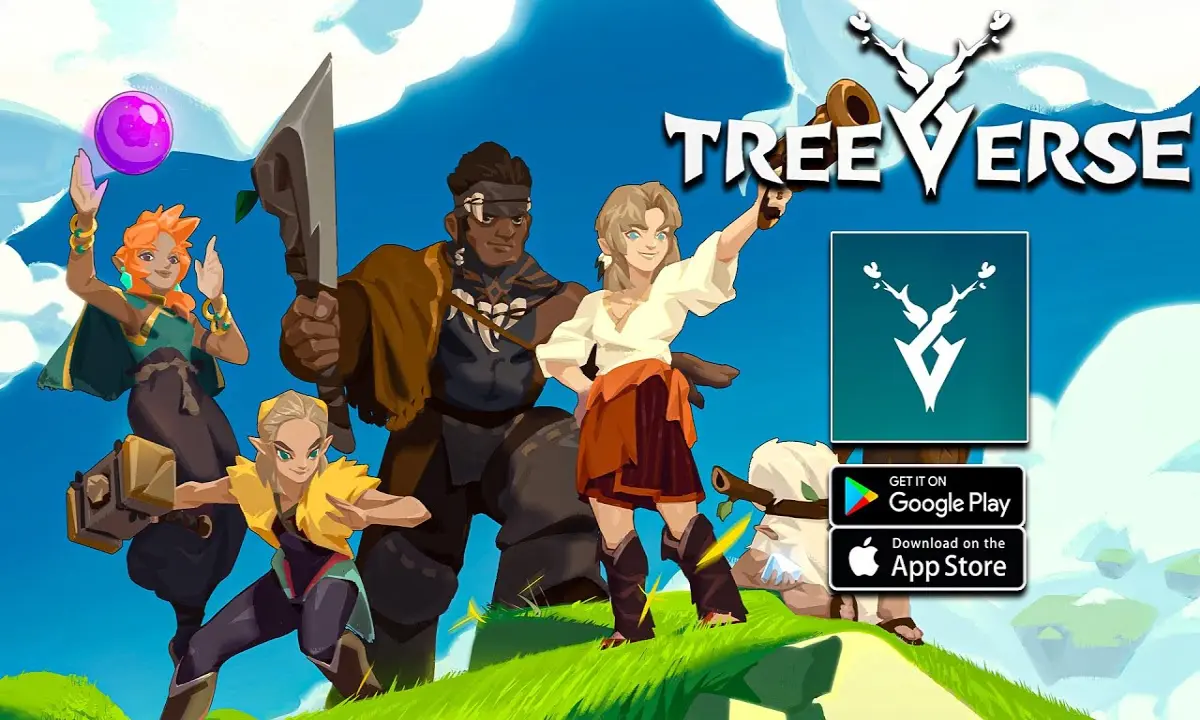
Treeverse is an MMORPG (massively multiplayer online role-playing game) of a rather unique kind: it’s based on blockchain technology. Presented as a heroic-fantasy world where players can actually own their virtual items, this game is fueling the curiosity of both gamers and crypto enthusiasts alike. Imagine an open-world RPG where every sword you earn or house you build could belong to you for real, in the form of NFTs (non-fungible tokens)... Ambitious, right? But beyond the catchy buzzwords and Web3 hype, what does Treeverse really offer? Is it the future of gaming or just another passing trend? Let’s dive into this project that’s as promising as it is controversial, with a balanced, critical, and engaging perspective.
The Core Gameplay of Treeverse
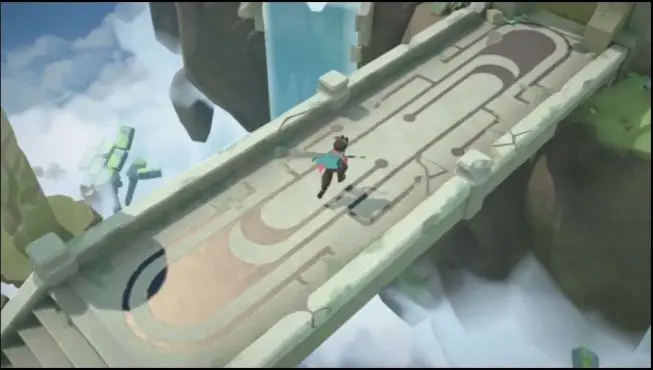
Before diving into the crypto aspect, let’s first talk about the game itself. Treeverse presents itself as a fairly classic fantasy MMO on the surface. Players start their adventure in a starter town (Lorwick, protected by a mysterious “World Tree”) and explore an open world filled with monsters and dungeons. The top-down view and fast-paced combat system are reminiscent of MOBAs or action RPGs: you click, dodge, and trigger special attacks in a chaotic but fun cooperative experience. There are no rigid classes here; your character is "classless," meaning you're free to shape your abilities and playstyle based on your choice of weapons or skills. Exploration is a key part of the game, with quests given by NPCs or discovered on the go, and various zones (from the arid dunes of Kenryos to the forests of Calbree) unlocked as you progress.
As with any MMORPG, Treeverse focuses on progression and loot collection. You’ll kill monsters, earn XP, gather resources, and craft powerful equipment. The developers at Endless Clouds (the studio behind the game) even refer to it as “Harvest of the Vanquished”: defeat fierce beasts and use their essence to forge legendary weapons with crafted blueprints. The game encourages cooperation: take on a boss together, form a group to explore a dungeon, or simply hang out in town with other players. On paper, Treeverse checks the typical MMO boxes with the right amount of grindand teamwork. Some even dub it the “RuneScape of blockchain”, hoping it will recapture that old-school community vibe where you fish, mine, and craft while chatting with your guildmates.
However, Treeverse distinguishes itself by integrating Web3 elements into its gameplay. Players get a personal plot of land – a piece of the virtual world where they can build homes and interact with others. These plots are actually NFTs, a digital asset players own, adding a layer of ownership to the gameplay experience. The idea is simple: if you invest time into the game, your digital assets belong to you, and not just the game developer. The game is about more than just playing; it’s about owning the things you create in-game, which could be traded or sold in a decentralized economy. However, it’s important to note that while the concept is exciting, it’s still a game in development, so the full promise is yet to be realized.
The Blockchain Economy in Treeverse
Let’s talk about money (virtual, of course) and economic models, because with Treeverse, it’s right there on the table. How does blockchain fit into the game? For the average player, it’s done pretty smoothly. Treeverse is free-to-play, downloadable on mobile or PC, and doesn’t require beginners to own a complex crypto wallet. In fact, the game automatically creates a blockchain wallet for you upon registration, through the Immutable Passport solution. You can sign in via Google or Apple, and voilà – Web3 mechanisms run in the background. In essence, you can play Treeverse without even realizing that NFTs or tokens are involved – a positive for accessibility, let’s agree.
That said, once you dig a little deeper, the NFT economy of Treeverse comes into play. The game relies on several categories of NFTs, which are rare virtual items for collectors or investors. First, the famous plots (Founders' Plots) mentioned earlier, of which there are a limited number (~10,420 private lots) that were sold back in 2021. These plots have increased in value on the secondary market, and their owners are treated with special privileges in-game. At the moment, owning such an NFT grants you status (eligibility for rewards, multipliers on earnings, etc.), but they promise real in-game utility later on – for example, being able to build a house on it or earn special resources linked to the plot.
In addition to plots, Treeverse also features Timeless (manga-inspired NFT characters) and NFTrees (collectible digital trees). These assets are designed to create a sense of community and exclusivity but have limited utility in-game for now. As the game progresses, they will likely unlock more benefits and gameplay features. For players who are not interested in high-priced assets, Treeverse is introducing more affordable NFTs that provide access to seasonal rewards, as seen in Season 1. These reward NFTs are priced modestly, and players who engage with the game can earn tokensthrough active participation.
The introduction of the $END token during Season 1 also marks Treeverse’s move towards a more robust play-to-earn model. This native token is expected to be used for in-game transactions, rewarding players who actively contribute to the game’s economy. However, Treeverse has taken steps to avoid a pay-to-win structure. While it’s a play-to-earn model, the purchases are mostly cosmetic or for short-term boosts, and the game remains accessible for those who don’t want to invest large sums upfront. The challenge, however, will be maintaining the right balance between fun and economic incentives.
Treeverse’s Future: Promises and Challenges
After all this, what’s the verdict on Treeverse? The project certainly has its strengths. First, as a game, it offers an attractive and accessible universe, with cooperative gameplay that could appeal to those looking for a new MMO to enjoy with friends. The ability to play for free across mobile or PC is a big advantage: the entry barrier is low for anyone simply wanting to try it out. On the blockchain side, Treeverse is managing to integrate the technology without making it overwhelming: a newcomer can enjoy the game without even realizing NFTs are involved, while a crypto aficionado can see opportunities to collect and trade. The team behind the game is strong, supported by major investors like Animoca Brands and IDEO since 2021, which adds a level of financial credibility (we’re not talking about a rushed NFT project). Moreover, the studio shows transparent communication with its community: open alpha tests, regular updates, and even reward campaigns to involve players in the game’s development. These positive signals suggest Treeverse isn’t just a hollow promise: development is ongoing, and the initial vision (blending MMORPGs with digital ownership) is gradually becoming a reality.
That said, it would be premature to proclaim Treeverse as the future of Web3 gaming. The game is still in development and has much to prove over time. Critics point out that, in its current state, the game doesn’t yet rival MMORPG giants in terms of richness and polish. True: the alpha version lacks content and advanced features, and it still suffers from unfavorable comparisons to established heavyweights. The road ahead is long to turn this sketch into a fully realized, living, persistent world with a truly dynamic player-driven economy and a substantial user base. The player base question is crucial: an MMO, blockchain or not, only makes sense if it can gather an active community. Convincing traditional gamers to invest in a game tied to NFTs may be a tough sell – there’s still significant skepticism about what some call “crypto-games,” after the scams and excesses of the NFT bubble. Treeverse will have to prove that its blockchain dimension isn’t just a gimmick but an actual improvement to the gaming experience. If we start seeing interesting player-to-player exchanges, a thriving internal economy thanks to genuinely owned items, it could change the game and win over skeptics. If not, the game might struggle to expand beyond the early crypto enthusiasts.
In terms of current value, it’s hard to ignore the speculation surrounding the project. NFTs linked to Treeverse are already being exchanged at significant sums, reflecting high expectations from some investors. However, this perceived value is still based more on the game’s future promise than on the current reality. If Treeverse fails to retain players or deliver the promised gameplay, these shiny NFTs could plummet in value – the market doesn’t forgive disappointing projects. On the other hand, if Treeverse succeeds in its mission, the value of its ecosystem (NFTs, $END token, etc.) could soar, driving adoption further. So, we’re in a speculative phase typical of crypto projects in development. For the curious player, the value to place on Treeverse today is mostly that of entertainment: does the game entertain you enough, regardless of whether or not you own NFTs? If yes, great – enjoy it like any other online game. If you’re just in it for the potential financial return, be cautious of possible disillusionment. It’s best to approach Treeverse as an MMO with a neat bonus (asset ownership) rather than a cash machine, lest you miss the most important part… the fun and immersion in a virtual world.
As for the future of Treeverse, it remains uncertain – as with any innovative project. The game has many challenges ahead: enriching its content, maintaining economic balance, growing its community, and staying relevant in the ever-evolving market. Competition in the Web3 game space is starting to appear, and Treeverse will need to stand out with quality, not just as the first of its kind. That said, we can applaud its efforts to pave the way and experiment with new solutions. Perhaps in a few years, the idea of truly owning in-game assets will become natural to many players, and Treeverse will have been a pioneer in that transition. Or perhaps the concept will remain niche, held back by technical or cultural barriers. Hard to say. For now, Treeverse is a project in progress: a promise that could evolve into a significant Web3 gaming milestone, or just another speculative experiment. In the meantime, let’s enjoy the adventure for what it offers today – and hope this virtual tree bears fruit in the future. Who knows, the “RuneScape of the blockchain” might just become reality… or maybe not, but the journey is worth the candle.






