
Tokenization — the transformation of physical assets into digital tokens recorded on a blockchain—is redefining the world of finance today. Asia, often a pioneer in new technologies, is quickly establishing itself as a global leader in this field. But why is the region attracting so many investors and innovators? Let’s take a closer look at how Asia could become the driving force behind the new global digital finance.
Why Is Asia the Promised Land for Tokenization?
One of Asia’s major strengths lies in the clarity of its regulation. Some countries, like Japan and Hong Kong, understood early on that clear rules reassure economic players and encourage innovation. For example, Japan offers a solid framework through its Payment Services Act. This law allows stablecoins to invest part of their funds in low-risk government bonds, providing greater security for investors.
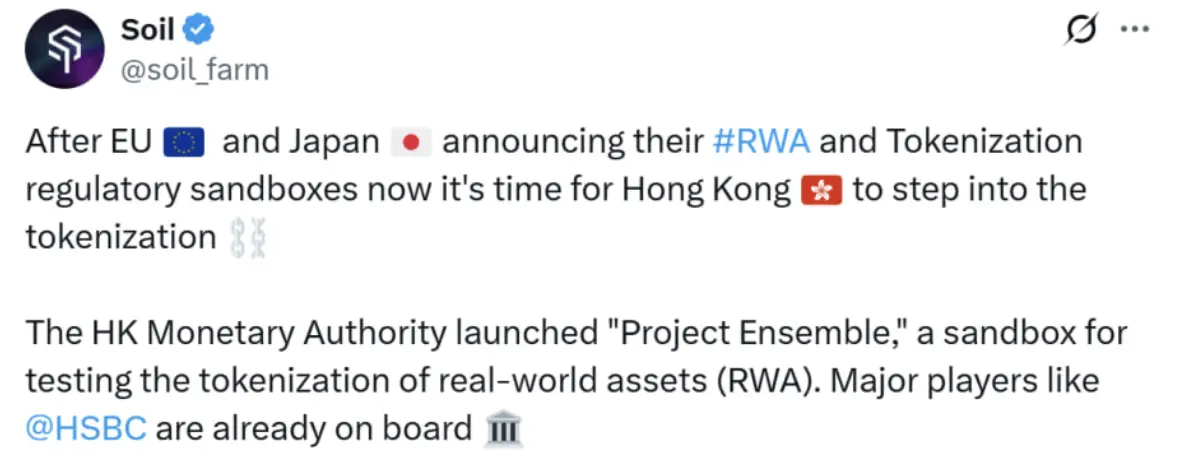
Hong Kong, for its part, shows a similar technological ambition. With the creation of the Ensemble Sandbox, the city provides companies with a secure and responsive testing environment to experiment with financial product tokenization. The result: financial innovations emerge there faster than anywhere else. This dynamic naturally attracts global players seeking new markets, reassured by the regulatory stability offered by these jurisdictions.
Asia thus proves that adapted regulation and structures favoring experimentation are key to turning technological potential into concrete opportunities for investors.
Which Tokenized Financial Products Are Booming?
Among the most successful products are tokenized bonds and ETFs. In Japan, for instance, it’s now possible to access real estate investments via security tokens, opening these markets to a much broader audience—even for those without large capital. For many investors, this is a first: they can diversify their portfolio and seize opportunities that were previously reserved for professionals.
Tokenization makes asset management easier: everything is automated, transparent, and traceable. Asset managers can interact directly with investors, reduce fees, and speed up all processes, without the need for costly or complex intermediaries. This simplicity especially appeals to those who were hesitant to enter the blockchain world: now, people can access digital finance easily and without technical complexity.
The adoption of these products has global impacts on digital assets. This trend puts Asia at the center of innovation, while reassuring investors through transparency and efficiency.
Tokenization: A New Lever for International Investment
The great strength of tokenization is its ability to make cross-border investments easier and faster. However, some challenges remain, notably making the regulatory and technical systems of different countries work together. In Asia, the will to align is growing; for example, Japan and Hong Kong are working to make their technology platforms compatible, so transactions between their markets can be smooth and secure.
For this to become widespread, a few conditions are essential:
-
Harmonize Laws: Rules need to be similar from one country to another to make fund transfers simpler.
-
Create Shared Infrastructures: IT tools that can “speak the same language,” to automate the exchange and management of digital investments.
-
Better Training: All players, whether investors or advisors, need to learn how to use these new tools.
Thanks to this dynamism, we are witnessing successful experiments and promising initiatives, like the rapid development of the Bitcoin market. This is a new momentum for the global economy, where the fluidity of exchanges becomes accessible to all, even individuals.
Ambitious Newcomers in the Asian Race
While Japan and Hong Kong set the tone, other countries in the region want their share of the market. Dubai, for example, has recently become a key hub for tokenization thanks to a very open policy for digital securities. Local authorities have updated their rules to allow real estate players to easily tokenize and trade properties. The result: in a recent operation, two fully tokenized apartments sold in just a few minutes to investors from over thirty-five countries—proof that global demand is real.
This movement is inspiring other regions. Each can rely on its local strengths to adapt tokenization to its needs, without simply copying the neighbor’s model. The goal? Enable each ecosystem to offer solutions suited to its specificities, while maintaining an international outlook.
We are thus witnessing the emergence of a new generation of finance: more accessible, international, and flexible. In this context, the question is no longer if tokenization will transform finance, but how far this revolution will take us.






