Turdus philomelos is one of the many species of thrush found in the world, but only Song Thrush can construct such beautiful melodic lines. Many people simply think that such a brown bird with a white belly and brown spots is an ordinary Thrush - Not an unusual thrush - Song Thrush.
Drozd Śpiewak to jeden z wielu gatunków drozdów występujących na świecie, ale tylko Drozd Śpiewak potrafi konstruować tak piękne linie melodyczne. Wiele osób sądzi po prostu, że taki brązowy ptaszek z białym brzuszkiem i brązowymi plamkami to zwykły Drozd - Nie to niezwykły drozd - Drozd Śpiewak.

How to recognize a song thrush?
Jak rozpoznać drozda śpiewaka?

Song thrush (Turdus philomelos) is a bird that grows up to 22 cm in body length, is quite stocky in structure with white-brown plumage and belongs to the order of passerine and thrush family.
Drozd śpiewak (Turdus philomelos) to ptak który dorasta do 22 cm długości ciała, jest dość krępy w budowie z białobrązowym upierzenie i należy do rzędu wróblowatych i rodziny drozdowatych.

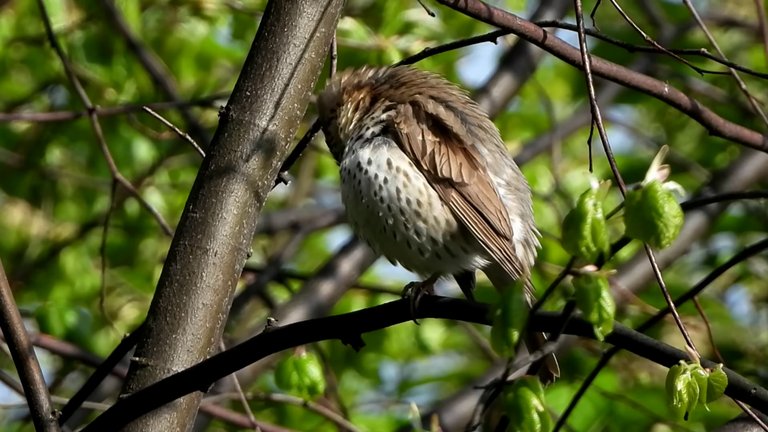
Its back is brown, while the dewlap, belly and breast are white with dark brown spots.
Jego grzbiet ma brązową barwę, natomiast podgardle, brzuch oraz pierś są białe z ciemnobrązowymi plamkami.

On the sides of the breast, from the dewlap to the rump, the feathers are slightly yellow in color. The singer's wing covers are yellowish. A distinctive feature is the lack of a white eyebrow above the eye of a similar Turdus iliacus
Na bokach piersi, od podgardla do kupra pióra są lekko zabarwione na żółto. Pokrywy pod skrzydłowe u śpiewaka są żółtawe. Charakterystyczną cechą rozpoznawczą jest brak białej brwi nad okiem, którą posiada podobny Droździk.

Food of Singing Thrush
Pożywienie Drozdów Śpiewaków

Song thrush is very often found on lawns in search of food, mainly snails, and those in shells. Its beak is not adapted to breaking down hard limestone, but that's not a problem for them. In late summer and fall, Drozdy changes their diet to fruit. Their menu is mainly blueberries, rowanberries, blackberries and many, many other fruits.
Drozd Śpiewak bardzo często urzęduje na trawnikach w poszukiwaniu pokarmu, a są nim głównie ślimaki i to te w skorupkach. Jego dziób nie jest przystosowany do rozbijania twardych wapiennych, ale to dla nich nie problem. Późnym latem i jesienią Drozdy zmieniają dietę na owocową. Ich menu to głównie jagody, jarzębiny, jeżyny oraz wiele, wiele innych owoców.

Song Thrush - A bird that uses tools
Drozd Śpiewak - ptak, który używa narzędzi
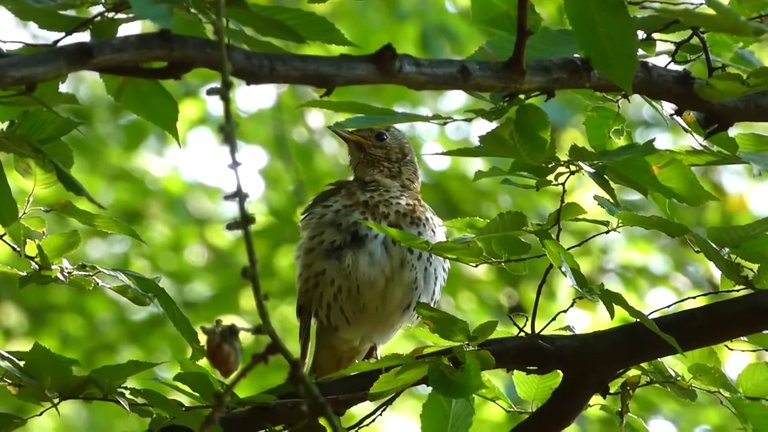
Song Thrush deals with the problem of extracting a tasty morsel from a snail shell extremely intelligently. They use a tool which is a stone. The thrush catches the stone in its beak and, with a sweeping movement of its head, throws it into the shell of the snail. He repeats the activity until the snail is completely broken.
Z problemem wydobycia smakowitego kąska z muszelki ślimaka Drozdy radzą sobie nadzwyczaj inteligentnie. Używają bowiem narzędzia, którym jest kamień. Drozd chwyta kamień w dziób i zamaszystym ruchem głowy miota nim w skorupę ślimaka. Powtarza czynność, aż do skutku, do całkowitego rozbicia skorupy ślimaka.

The second method is to catch the snail with its beak and hit it against a hard surface, i.e. a stone or rock. Either way, it is not the method that counts for them, but the effect, and the stone is remembered by Song Thrush and will be used again on the next occasion.
Drugą metodą jest chwytanie ślimaka w dziób i uderzanie nim o twardą powierzchnię, czyli kamień czy skałę. Tak czy inaczej, nie liczy się dla nich metoda, tylko efekt, a kamień zostaje przez Drozdy zapamiętany i posłuży ponownie przy następnej okazji.

Why the name Song Thrush?
Dlaczego Drozd Śpiewak?

Reference to the singing of thrushes can be found in many languages. For example, in English, a singer's thrush is called "song trush", in French "grive musicienne" or in German "singdrossel". Undoubtedly, thrushes are considered the most melodiously singing birds, but the Song Thrush stands out here.
Odniesienie do śpiewu drozdów można odnaleźć w wielu językach. Np. po angielsku na drozda śpiewaka mówi się „song trush”, po francusku „grive musicienne” czy po niemiecku „singdrossel”. Niewątpliwie drozdy uważane są za najbardziej melodyjnie śpiewające ptaki, ale Drozd Śpiewak się tutaj wyróżnia.

The environment and nest of a song thrush
Środowisko i gniazdo drozda śpiewaka

The song thrush is a fairly common bird in all of Europe. It lives in forests, parks and old gardens and does not avoid human presence. It is there that it sets up nests that seemingly do not differ from the nests of other birds. But these are only appearances, because inside Drozd's nest looks different. It uses clay and mixed with saliva, which creates a hard crust like a cement screed.
Drozd śpiewak jest dość pospolitym ptakiem w całej Europie. Zamieszkuje lasy, parki oraz stare ogrody i nie stroni od obecności człowieka. Tam właśnie zakłada gniazda, które pozornie niczym nie różnią się od gniazd innych ptaków. Ale to tylko pozory, bo wewnątrz gniazdo Drozda wygląda już inaczej. Używa on bowiem gliny i zmieszanej ze śliną, która powoduje powstanie twardej skorupy niczym wylewka cementowa.


Thrush eggs are also very specific. They are greenish blue in color and speckled with brown spots. Ornithologists claim that it is a kind of camouflage because they look like tree leaves.
Jaja Drozda są również bardzo specyficzne. Są bowiem barwy zielonkawo niebieskiej i nakrapiane brązowymi plamkami. Ornitolodzy twierdzą że jest to swojego rodzaju kamuflaż, gdyż wyglądają jak liście drzew.

Enjoy 😉