
Julia Virgin has not smoked for eight weeks. Since then, she says, a lot of beautiful things have happened to her body, but also her psyche. And what exactly, Tobias Ritter, an addiction expert, explained to her.
"Mom, you're going to die from smoking!" The more often my son was horrified by the fact that he saw me smoking, the less I could justify consuming tobacco to myself. And that's why I stopped.
I smoked my last cigarette two months ago. Addiction expert Tobias Ritter is thrilled with my move.
He runs a special clinic for smoking addicts at the Ludwig Maximilian University Clinic in Munich. "When you stop smoking, a lot of positive things happen in your life very quickly."
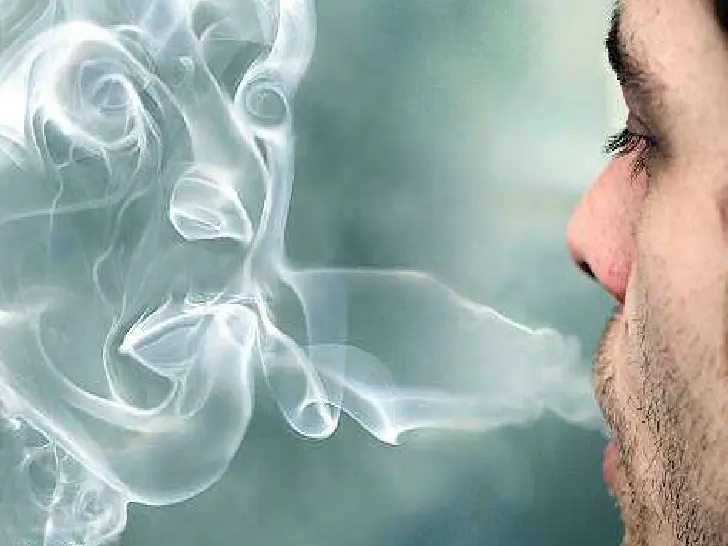
Very fast, very much ...
After only eight hours, the body is much better supplied with oxygen, explains Ritter. After only a day or two, many people said that their sense of smell and taste "improved".
After two weeks, the function of the lungs significantly improves, which is especially noticeable when playing sports. But as a smoker, I had the feeling that I was in the same shape as now, after quitting.
"You may have more frequent bouts of coughing than you used to," says Ritter. "The reason for that is the lungs, which are starting to clear." And that "spring cleansing" lasts about a month. "Besides, after a month, the immune system is significantly strengthened."
If I manage to abstain for another month, I will be able to look forward to much better sleep, Ritter tells me. "Smokers experience a nicotine crisis during the night. Because of that, they don't wake up, but they sleep much more restlessly. After three months, sleep returns to normal. "
The danger of a third cigarette
Before I decided on complete abstinence, I thought it was healthier to reduce the number of cigarettes. But in that case, I should not smoke more than two a day: from the third poisonous smoke causes great damage to the body.
The risk to the cardiovascular system, so the risk of stroke or heart attack, does not increase significantly, whether you smoke 3 or 20 cigarettes, "says Ritter. As for cancer, things are different. The danger grows with each individual cigarette.
"It's good that you quit," Ritter keeps telling me. His joy is contagious - because my enthusiasm for quitting was relatively modest.
At the same time, every other smoker dies due to tobacco addiction. About 50 percent of them even before they reach their 70th birthday. "At the age of 50 at the latest, you would feel the effects of smoking," says the expert. And suddenly I am very happy that I stopped - before the "breakup" became visible.
A high percentage of "returnees"
But it was not easy at all. And I didn’t need aids, like nicotine patches, hypnosis, or acupuncture to give up cigarettes.
The fact that only my strong will was enough could have something to do with the fact that I started smoking relatively late - only at the age of 21. "It's another reason to be happy," says Ritter.
"Most smokers start between the ages of 12 and 16, while the brain is still maturing. Nicotine is an extremely active neurotransmitter, which decisively influences the development of neural connections in the brain. "
The consequence is an addiction that lasts a lifetime, and which is difficult to overcome with willpower alone, explains the expert.
Ritter somehow managed to make me feel both proud and relieved. But then he tells me: "Out of 100 smokers who, like you, stop smoking, so without help, 95 of them start smoking again within a year."
Smoking illusion
One reason to return to smoking waters could be the "smoking illusion," the evil psychological trick of nicotine. Psychological addiction is very strong, Ritter points out.
And that's why, of course, I also fell for that smoking illusion: for years I convinced myself that smoking calms me down, reduces stress, and offers me a short break.
"In reality, each cigarette increases the number of heart attacks and makes you more restless," says my interlocutor.
The fact that I had the feeling that smoking calmed me down is related to the fact that, after a long break without a cigarette, I had an abstinence crisis and that my body required new nicotine. "So a cigarette takes a toll on you that you, as a non-smoker, wouldn't even feel."
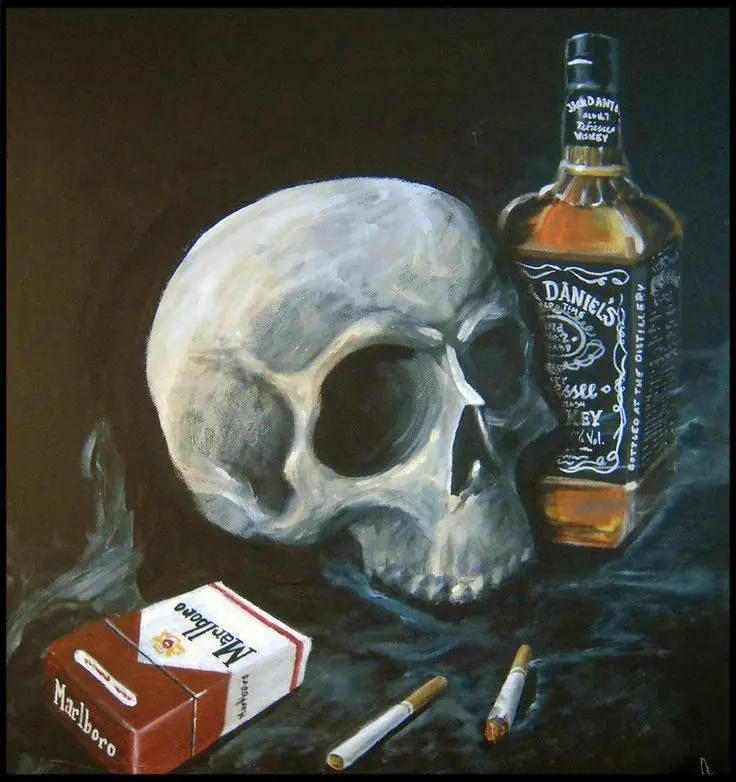
Pavlov's reflex
The first dinner with friends, with music and wine, but without a cigarette, was quite comical. I was missing something and somehow I felt weird.
For years, I have become very successfully accustomed to the fact that smoking is an integral part of certain situations: with coffee, with wine, during a break.
"It works like Pavlov's dog: you give the dog something to eat and ring the bell at the same time. "Sometimes it's enough to ring the bell and the dog is already drooling," explains Ritter.
And for smokers, that bell rings constantly - it is smoked for relaxation and when someone wants to "activate". As a reward after work, after meals, while waiting for the bus, or after sex. And so on. "Cigarettes are firmly integrated into everyday life smokers, that's the problem. "
I want to stop. But how?
It is not easy to stop. That is why Tobias Ritter first reassures his patients by claiming that failure is an integral part of the process.
"When patients tell me that they have already tried to quit smoking five times, then I first acknowledge those attempts. This suggests that this matter is very important to them. "
It can be learned like cycling, he says. Falls are an integral part, it is important to get up again and try again. In addition, it is important to signal to the brain that something has changed.
"Sit in a different chair in the morning than usual. Drink tea instead of coffee. Put the plant in your work somewhere else. ”This can deceive Pavlov's dog in the smoker's head.
So intuitively I did everything right! Instead of moving the furniture, I left my everyday life behind and traveled to my best friend for a few days.
In the meantime, I rarely think about smoking. Maybe I'm one of those five percent who "survive" the first year after quitting?
And if that's not the case, it doesn't have to automatically be a return to the past, says Tobias Ritter. "One cigarette is reckless. Only from the second is it a return to smoking. "






