Good morning dear virtual friends, how are you today? Yesterday I wrote about computers and emotions, and then about the artificial immune system, so that got me thinking that the only way to realize ideas like the eradication of all diseases, space travel, or prosperity for every human being, is to advance ourselves beyond the limitations imposed by the evolution and physics of our home planet.
When I wrote about the artificial immune system last week, I came across a much broader and more complex topic. Artificial immune systems, let me remind you, represent the idea of inserting a multitude of nano-robots into the human body - connected devices of microscopic dimensions. They would, according to their specialized roles, help the organism in diagnosing, preventing, and fighting various types of diseases.
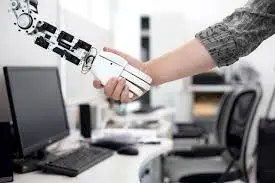
Now, any attempt to directly interfere in the functioning of the human body raises the question of possible consequences due to accidental or intentional mistakes, abuse, and the way in which this area should be regulated.
After all, the very mention of the word "chipping" starts a very lively debate in which scientists and experts are not unanimous, as well as the general public. As I mentioned, the topic is difficult and complicated. Many are convinced that the union of people and "machines" is an inevitable future.
The only way to realize ideas like eradicating all diseases, traveling through space or well-being for every human being, is to improve ourselves through the limitations imposed by the evolution and physics of our home planet. On the other hand, should we interfere in the natural order of things at all, and what potentially catastrophic consequences could it cause? Doesn't it seem that the development of technology has already brought the Earth to the brink of ecological catastrophe?
And then imagine a handicapped person whose electronic implant in their brain would allow them to walk, see or hear again. In a similar situation, would you be willing to accept the risk of directly connecting a person and a computer because of yourself or your loved ones?
A complex and difficult question! Trying to find boundaries and unambiguously determine what is allowed to interfere with technology in natural processes, only further fuels the debate.
If the artificial hip is OK, is its advanced version allowed, capable of registering and reporting how the organism accepts it, for example?

This and similar topics remind us once again that the development of technology - especially when it is exponentially accelerated as it is happening today - raises many questions to which innovators and engineers have no answer. That is why sociology, ethics, philosophy, and other social sciences remain relevant in the digital age.






