
Deutsche Bank is set to introduce secure storage solutions catering to institutional investors seeking to alleviate concerns surrounding cryptocurrency investments. A development that could have ramifications for both established and emerging projects such as Tron (TRX) and Domini.art (DOMI).
As I said in my earlier news article, Domini.art is an innovative platform at the intersection of blockchain technology and traditional art practices, aiming to deliver services within the decentralized finance (DeFi) realm. It has been steadily gaining traction in the cryptocurrency market due to its unique fusion of art and finance.
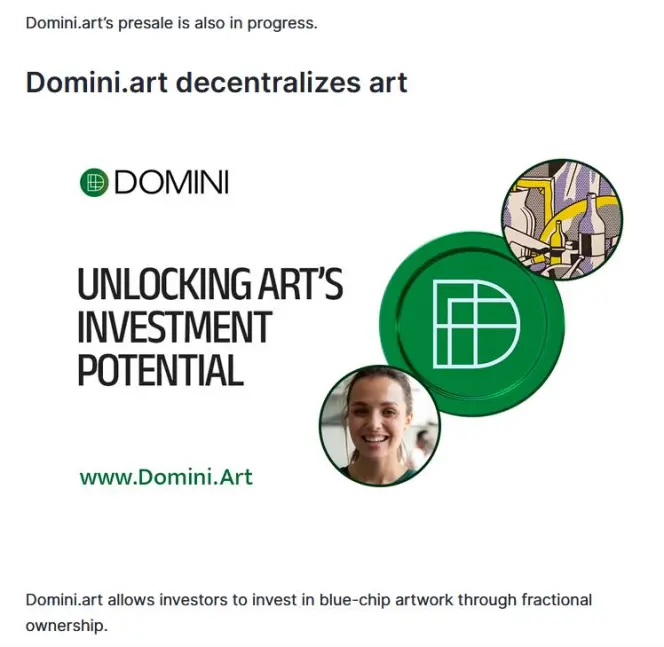
This new project allows investors to participate in “fractional” ownership of prestigious artworks. This is made feasible by tokenizing artworks into non-fungible tokens (NFTs) and offering them on the platform's NFT marketplace.
Then, there is a dedicated platform where investors can list their NFT ownership stakes for sale or explore available fractions of other artworks.
The token called DOMI serves as the native ERC-20 token that powers the entire Domini.art ecosystem. Its structure incorporates a deflationary burn mechanism and a redistribution system which I like to know more about if anybody has a clue!
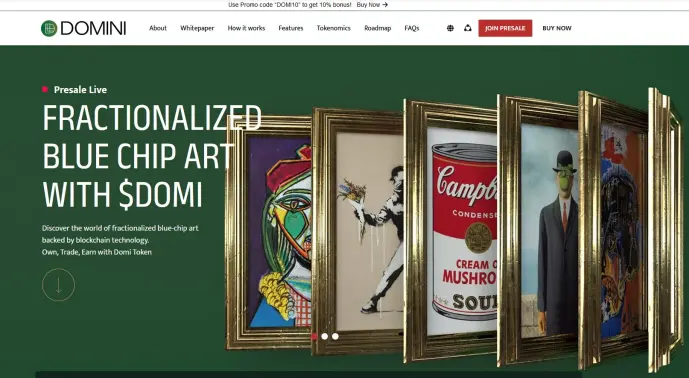
Blue-chip Artworks Investments
Domini.art (DOMI) is a way to invest on Blue-chip artworks, which what is exactly?
Blue-chip art refers to art with solid reputation & a history of success Vs, red-chip arts which usually belong to upcoming or emerging artists actively creating work on the primary market as well as the secondary market. In other word, Red-chip art is considered the polar opposite of blue-chip art.
Another token that potentially benefits this process is TRX, from TRON, a smart contract platform designed to advance decentralization by granting content creators complete ownership of their content.
Deutsche Bank's initiative to offer crypto custody services tailored to institutional investors could potentially have a positive impact on TRX and DOMI, especially the latter being a deflationary token.
PS: I should have an expanded review on deflationary tokens at another time.





