
In this post, we consider the English opening.
- c2c4, e7e5.
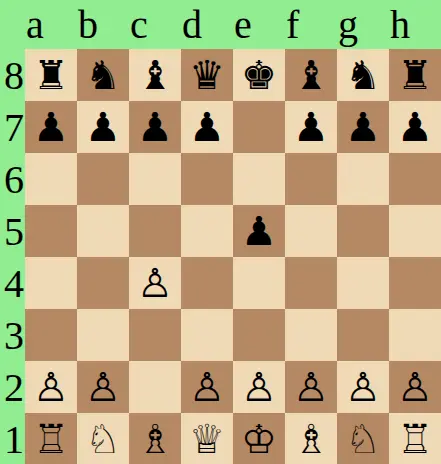
2. b1c3, g8f6.
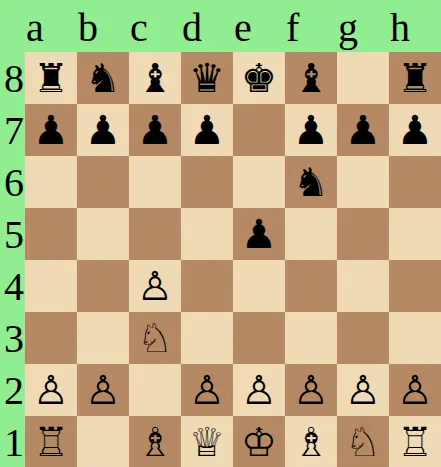
3. g1f3, b8c6.
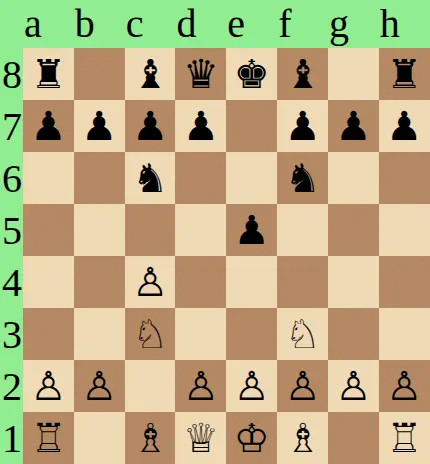
4. d2d4, e5d4.
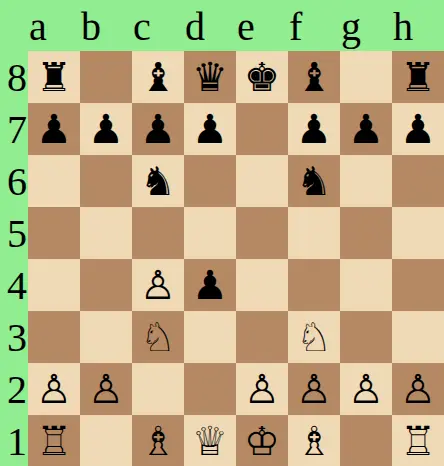
5. f3d4, f8b4.
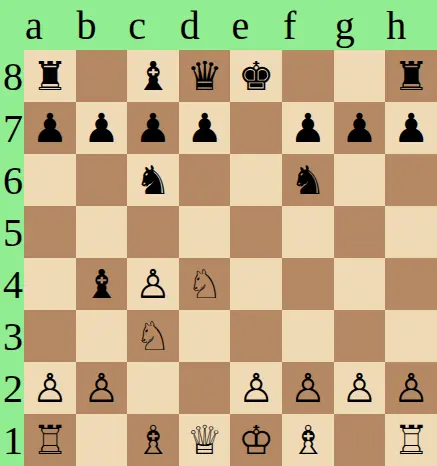
The English Opening, characterized by the move 1. c2c4, is a flexible flank opening established by Howard Staunton in the 1840s. Initially unpopular, it gained prominence in the 20th century through Botvinnik and became a favorite of world champions like Kasparov and Karpov, serving as a solid yet strategic alternative to 1. e2e4 or 1. d2d4.
The opening is named after Howard Staunton, the leading 19th-century English master.
Debut: Staunton famously used 1. c2c4 six times against Pierre de Saint Amant in their 1843 match and later at the 1851 London tournament.
Initial Reception: It did not gain immediate popularity among contemporaries, with its recognition only truly developing much later.
The opening was revived and developed by players like Nimzowitsch, Réti, and Rubinstein. In the 1930s, Mikhail Botvinnik began using it extensively, making it a reliable, solid positional weapon.
"Golden Age" (1960s-1980s): It became a staple in elite chess, utilized frequently by Tigran Petrosian, Anatoly Karpov, and Garry Kasparov.
Fischer’s Adoption: Bobby Fischer famously switched to the English against Boris Spassky in their 1972 World Championship match.
For more info, see [3-6].
If you want to know how to play chess without any registrations, uploads, installations on any device connected to internet (including a mobile phone) then, see [1].
If you want to know how to earn some money/crypto by playing chess games online then, see [2].
References:
1. https://www.dynpass.online/tools/chess/start.html
3. https://www.chess.com/openings/English-Opening
4. https://www.youtube.com/shorts/PYELrsT_LoM






