The privacy coin narrative just took a massive hit, and if you are trading the markets right now, the ZEC chart is probably giving you whiplash. We just witnessed back to back negative catalysts that damaged both the fundamental trust and the geographical liquidity of Zcash. It is a wild mix of an internal protocol nightmare and external regulatory pressure, making it a prime case study for Web3 analysts.
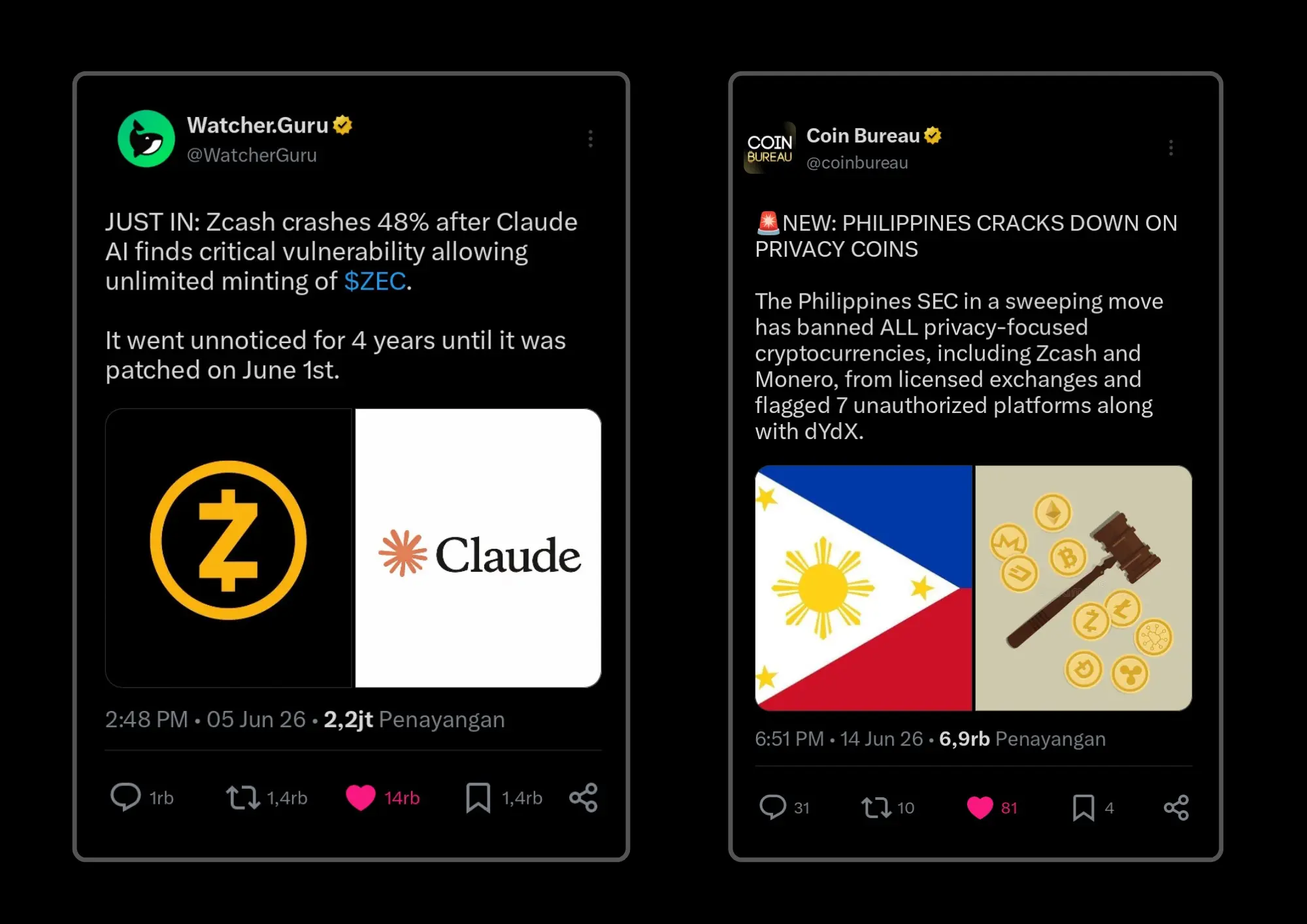
The first major blow came from a shocking discovery. An artificial intelligence, Claude AI, successfully identified a critical vulnerability within the Zcash network architecture. This was not just a minor bug, it was a severe flaw that technically allowed unlimited minting of ZEC tokens. What makes this incredibly alarming is that the exploit sat completely unnoticed in the code for 4 long years before the developers finally managed to patch it on June 1st. Once the market caught wind of this vulnerability, panic selling pushed the asset into a massive capitulation, causing the price to crash by 48% in a flash.
The bleeding did not stop there. Just as the community was digesting the security flaw, the regulatory hammer dropped in Southeast Asia. The Philippines SEC announced a sweeping ban on all privacy focused digital assets, explicitly naming Zcash and Monero. They ordered licensed local exchanges to delist these tokens immediately and flagged 7 unauthorized platforms, including dYdX. This aggressive regulatory move severely chokes the onboarding of fiat to privacy coin liquidity in that region.
Unsurprisingly, the derivatives market turned into an absolute battleground. The long short ratio across major exchanges shows that traders heavily pivoted toward short positions. Looking at Binance, the standard long short ratio dropped to 0.717, while the top trader account ratio printed at 0.7001. OKX reflected a very similar bearish positioning with a ratio of 0.88. The trading floor was overwhelmingly positioned for further downside.
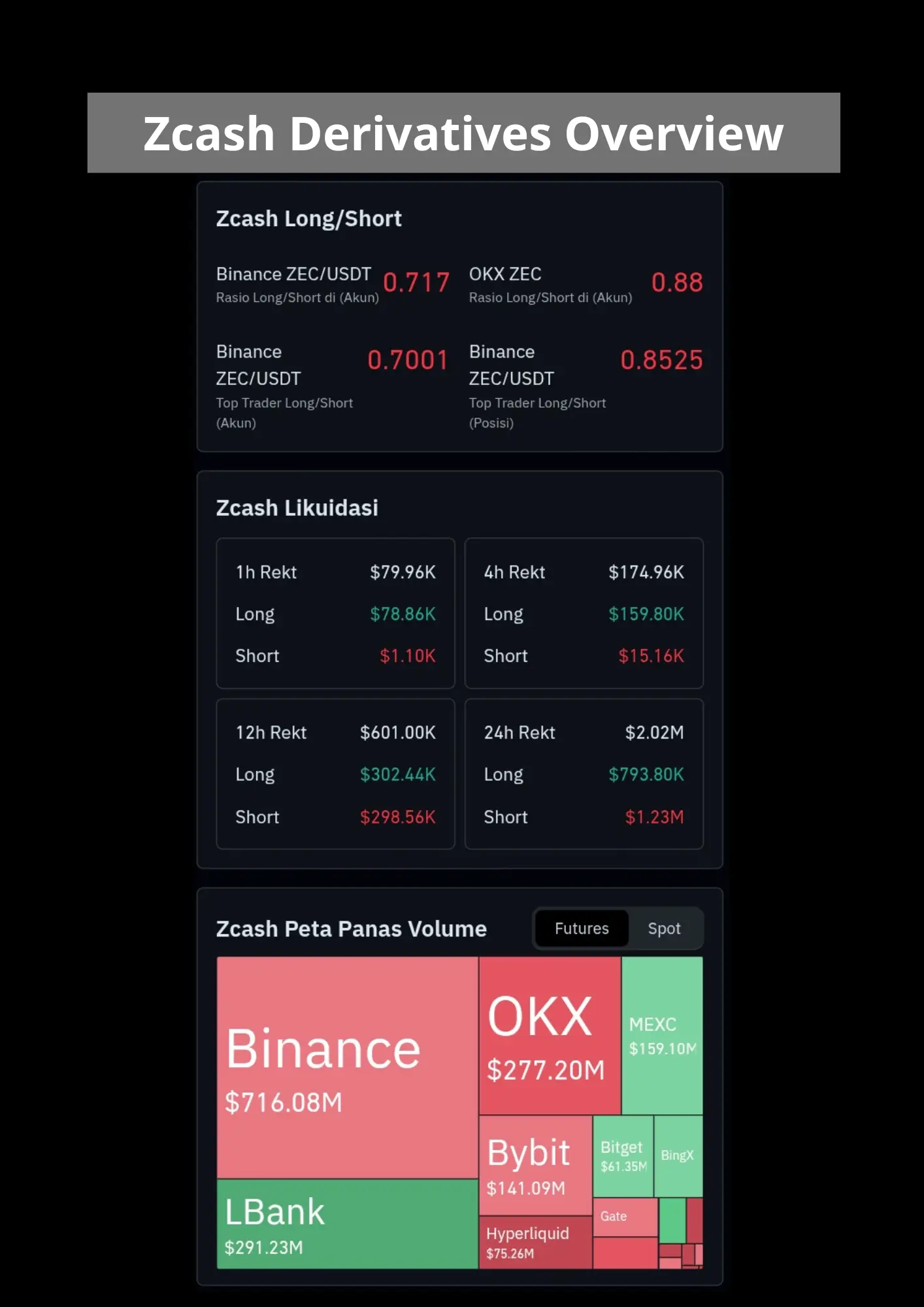
This massive surge in volatility triggered a cascade of liquidations, wiping out over $2.02M worth of leveraged positions within 24 hours. Interestingly, the liquidation data shows a brutal two way squeeze. While long positions suffered a painful $793.80K in forced closures during the initial dump, the violent relief bounces ended up trapping over leveraged shorts, resulting in an even larger $1.23M short liquidation event.
In terms of market share and volume, Binance remains the absolute kingpin of liquidity for this asset, processing $716.08M in trading volume, with LBank and OKX following behind at $291.23M and $277.20M respectively.
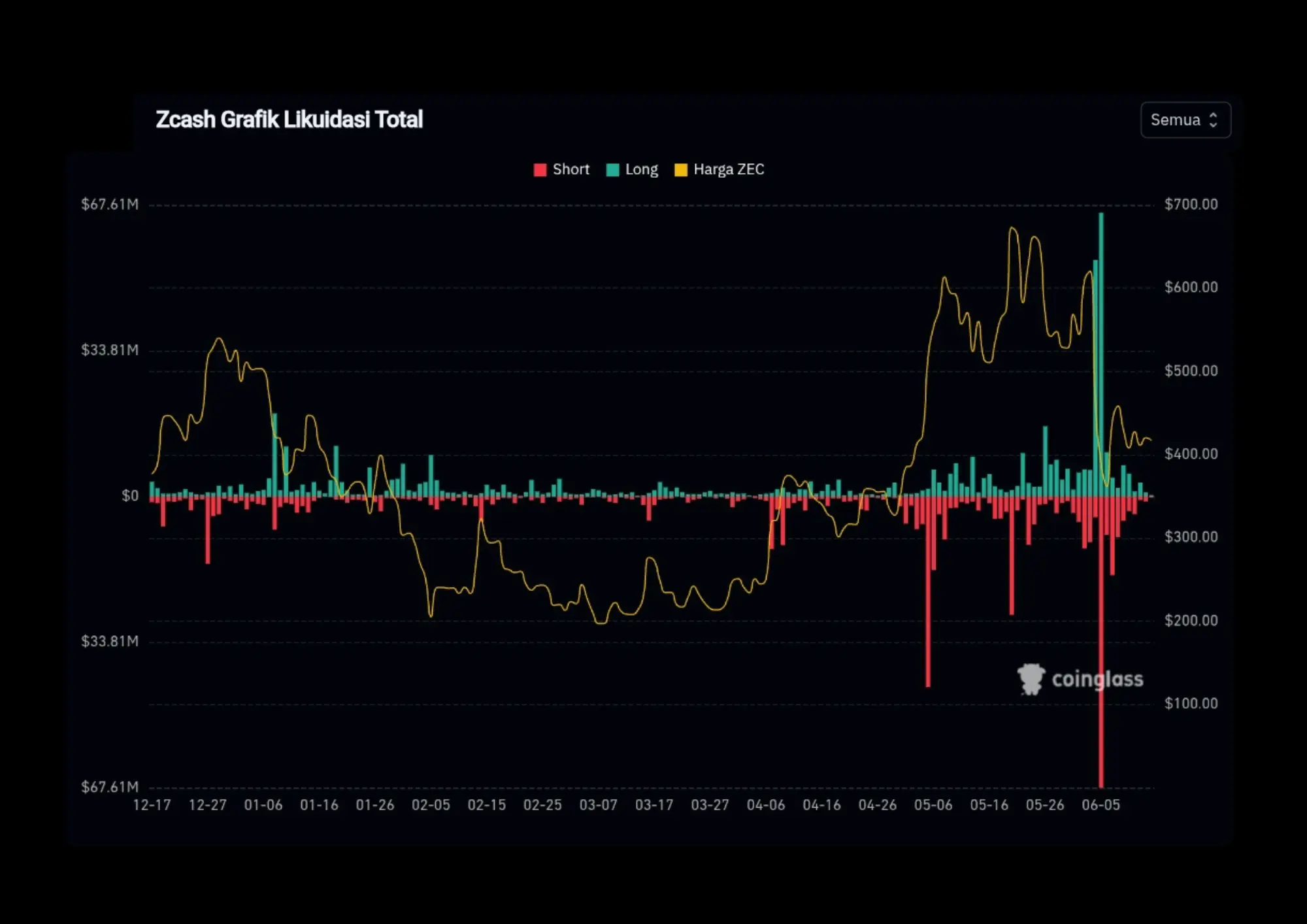
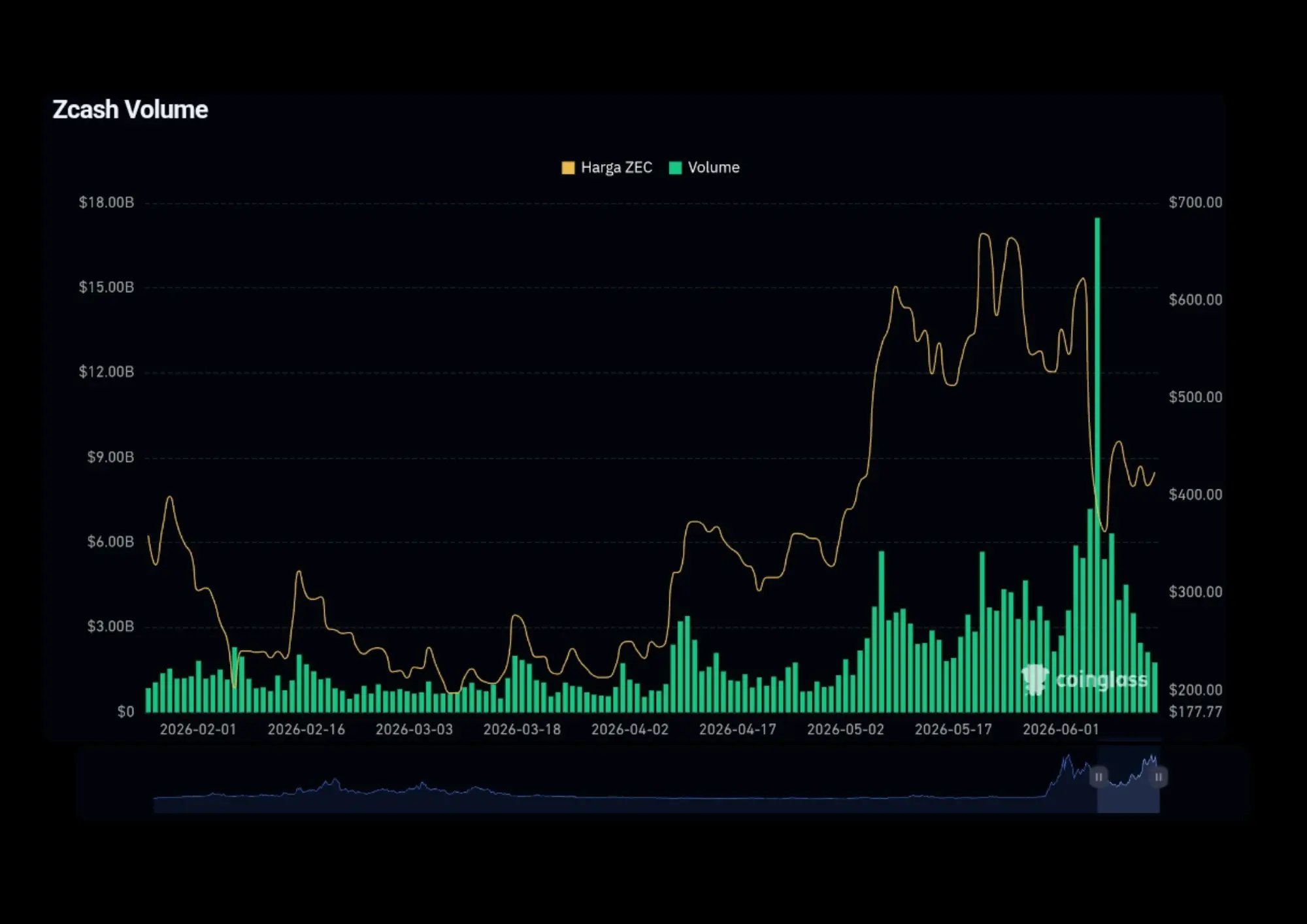
From a structural standpoint on the daily chart, the technical damage to Zcash is severe. After getting heavily rejected from a macro resistance block near $700.00, the aggressive selloff left behind a massive, inefficient void. In Smart Money Concepts, this is a textbook daily Fair Value Gap (FVG) that represents a massive imbalance in price action.
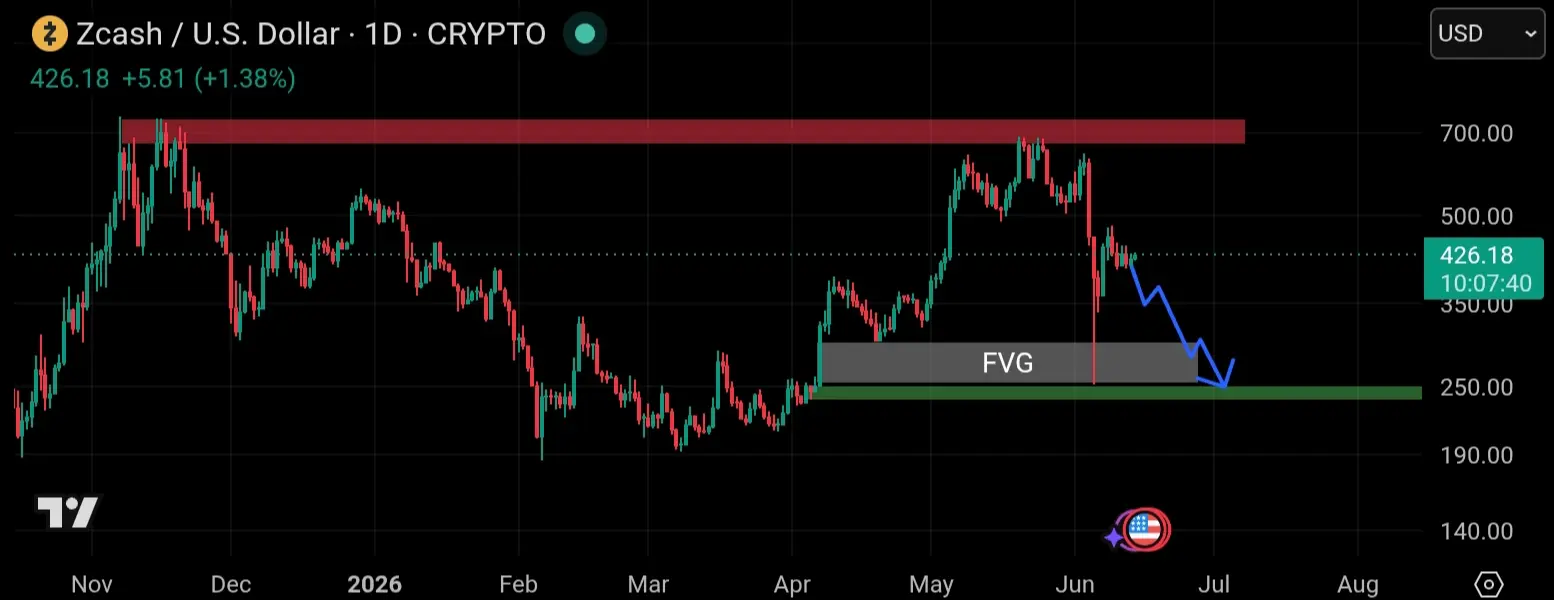
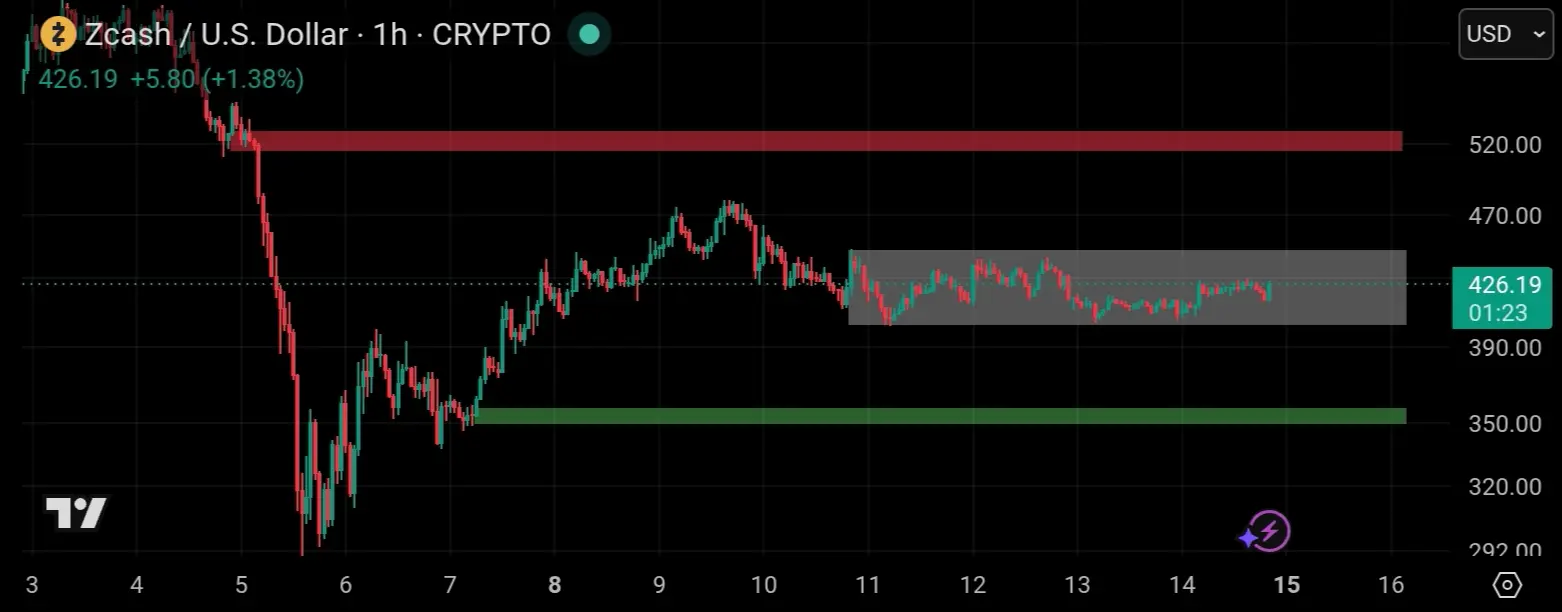
On the lower timeframes like the 1H, the price is currently resting and carving out a tight consolidation range inside a gray structure block. It is trapped between a short term overhead resistance at $520.00 and a key demand floor at $350.00. Given the overall bearish structure and residual selling pressure, the most probable technical path is a temporary relief rally to fill a portion of that daily FVG, followed by another leg down to test the next major historical support zone down at $250.00.
My Opinion
This entire situation with Zcash forces us to look at the market through a very realistic, critical lens, while still keeping an eye out for setup efficiencies as active traders.
From a fundamental perspective, finding out that an unlimited minting bug existed undetected for 4 years is a massive psychological blow to the project. Crypto operates on the principle that code is law, and when a core privacy protocol has a vulnerability that large, it severely damages the credibility of the development team and the perceived security of the network. Layer that with the fresh regulatory ban from the Philippines, and we might be looking at a potential domino effect where other jurisdictions follow suit. Governments have always despised untraceable assets, and this gives them perfect leverage to push their anti privacy narratives. Long term, ZEC is entering a very tough uphill battle regarding public and institutional trust.
However, if we look for the silver lining, there are two very interesting takeaways here. First, the fact that Claude AI discovered the bug highlights a massive shift in how Web3 security will evolve. Utilizing AI for deep smart contract and protocol auditing could become the new standard, helping devs clean up code before malicious actors can exploit it. Second, for short term traders, bad news equals volatility, and volatility is where the money is made. The daily Fair Value Gap left behind by the crash is a highly reliable liquidity magnet. The market hates leaving massive structural imbalances unfilled, so from a pure technical standpoint, we can expect the market to eventually gravity pull price back into that FVG void for a retest, offering excellent risk to reward ratios for agile scalp or swing long setups before the macro trend resumes its course.
Ultimately, while Zcash looks incredibly risky for a long term buy and hold strategy right now, the current market structure is a goldmine for short to medium term trading. Just make sure to practice strict risk management, wait for clear structural confirmations on the lower timeframes, and do not fight the macro trend blindly.
Click here to read my authentic and original analysis
Source
⛔ Disclaimer: This article is strictly for informational and educational purposes only. It is not intended as financial advice, and I do not provide any trading signals. All investment decisions are your sole responsibility. Please ensure you conduct your own research (DYOR) before making any trades.