
The landscape of digital asset promotion in Indonesia is undergoing a dramatic shift. The local financial regulator known as OJK has stepped in with a definitive policy that changes the game for content creators. Moving forward, anyone acting as a crypto influencer or key opinion leader must secure an official competency license before sharing any form of investment advice or asset recommendations with their audience.
This bold regulatory move quickly caught the attention of major international web3 outlets. Both CoinMarketCap and Coin Bureau published updates covering this sudden enforcement practically at the same moment.
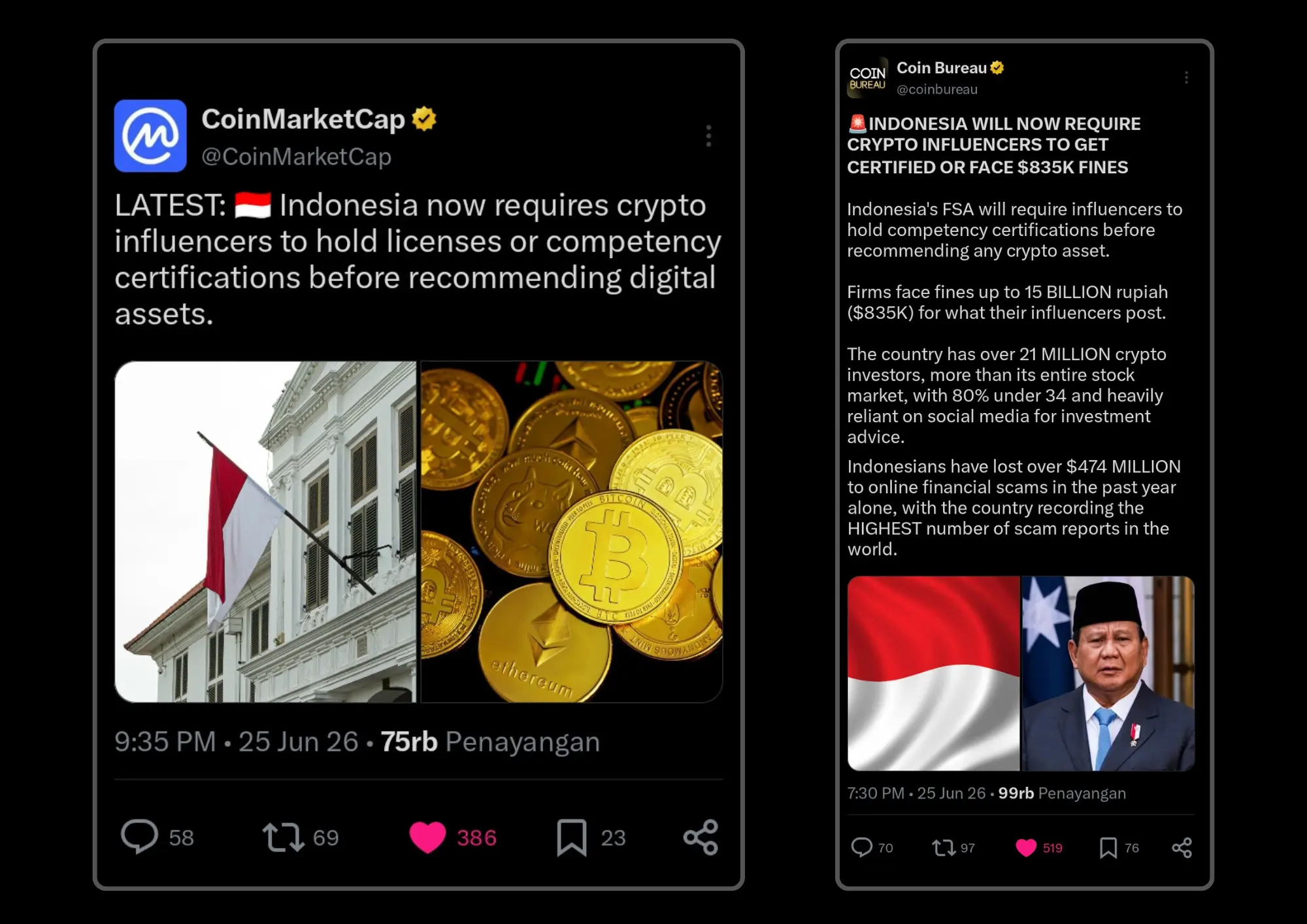
Global platforms are paying close attention because the numbers behind this decision are immense. Reports indicate that Indonesian citizens suffered roughly $474 million in losses from online investment scams over the past twelve months. To combat this, the authorities are implementing severe penalties where companies utilizing uncertified promoters can be fined up to Rp15 billion which equals roughly $835K.
The state is clearly trying to manage an ecosystem that has grown exponentially. According to recent demographic metrics across southeast Asia, indonesia currently commands the largest population of digital asset holders in the entire region.
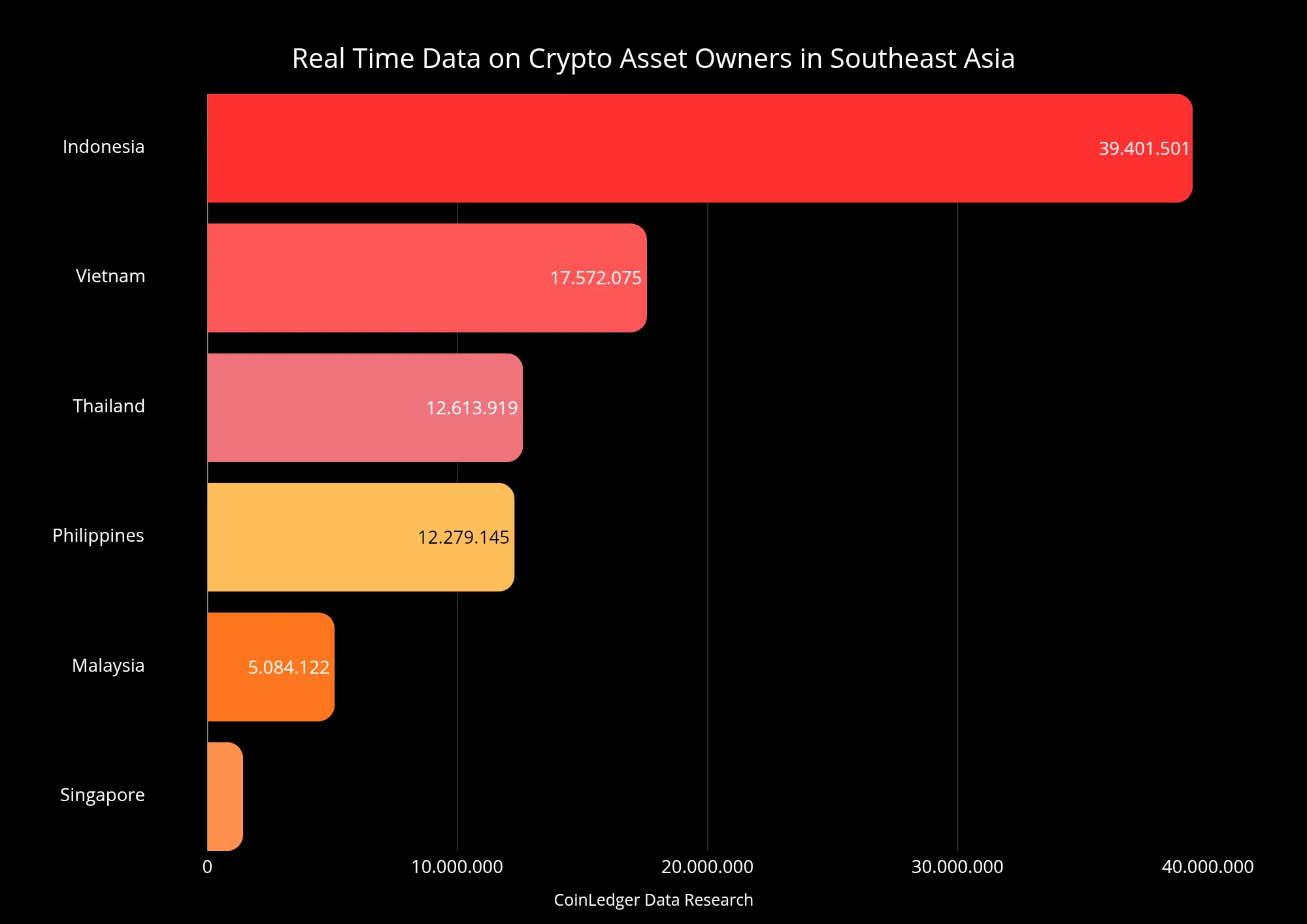
As displayed in the visualization above, the country leads by a landslide with more than 39 million active crypto participants. This massive figure places Indonesia far ahead of regional neighbors like Vietnam and Thailand. Such an enormous retail base explains why global blockchain startups view the archipelago as their primary target audience.
The deep liquidity and high interest of the local market become even more obvious when looking at the Global Crypto Adoption Index compiled by Chainalysis. The country proudly sits at the 3rd spot worldwide for grassroots engagement.
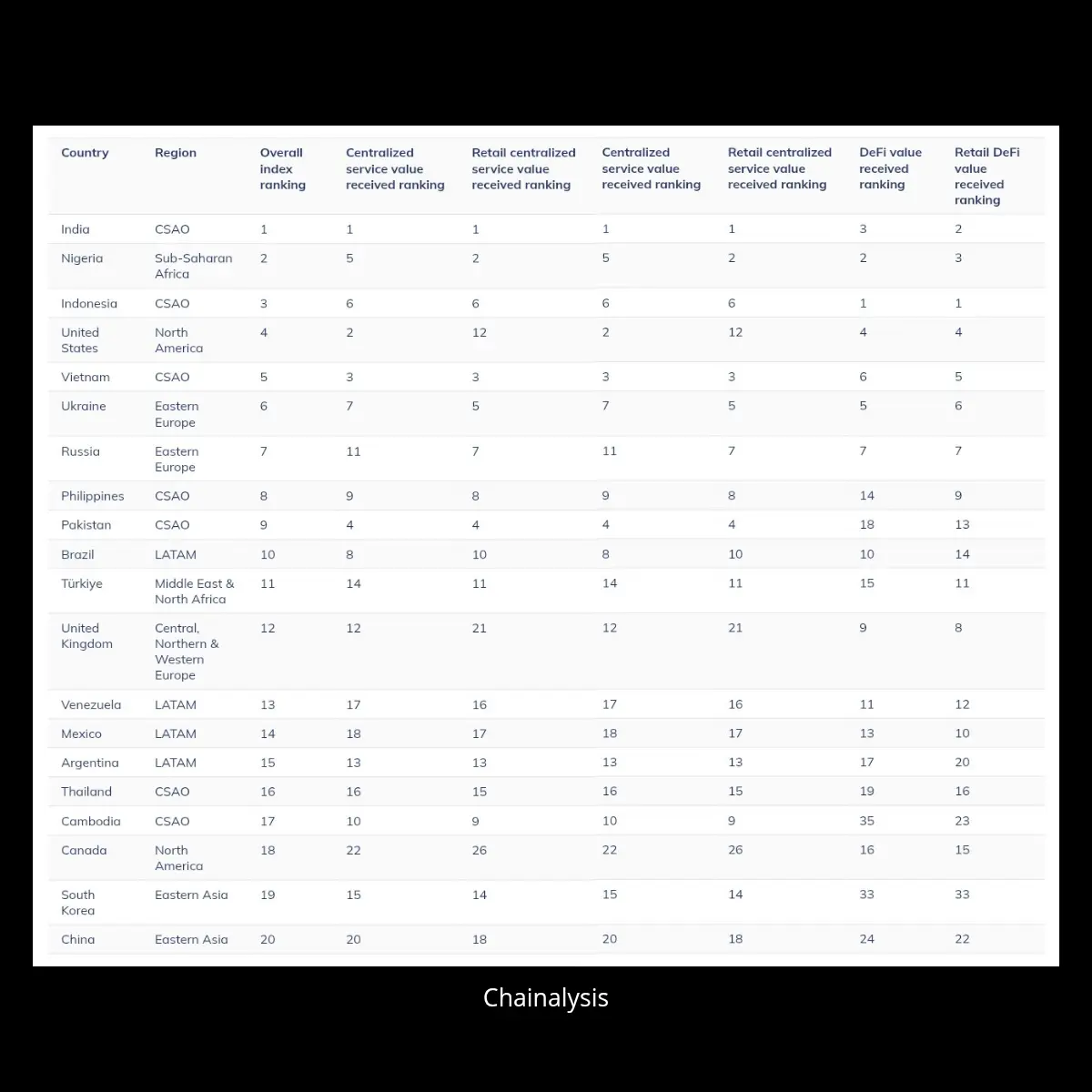
Looking closely at the breakdown of the Chainalysis data reveals an incredible metric. Indonesia holds the number 1 rank globally for retail defi value received. This highlights that local traders are not just buying assets on standard local applications. Instead, they are deeply involved in decentralized ecosystems, using web3 wallets to interact with smart contracts, liquidity pools, and decentralized applications.
This intense market penetration is further verified by international studies showing the territory consistently maintaining its ground within the global top ten.
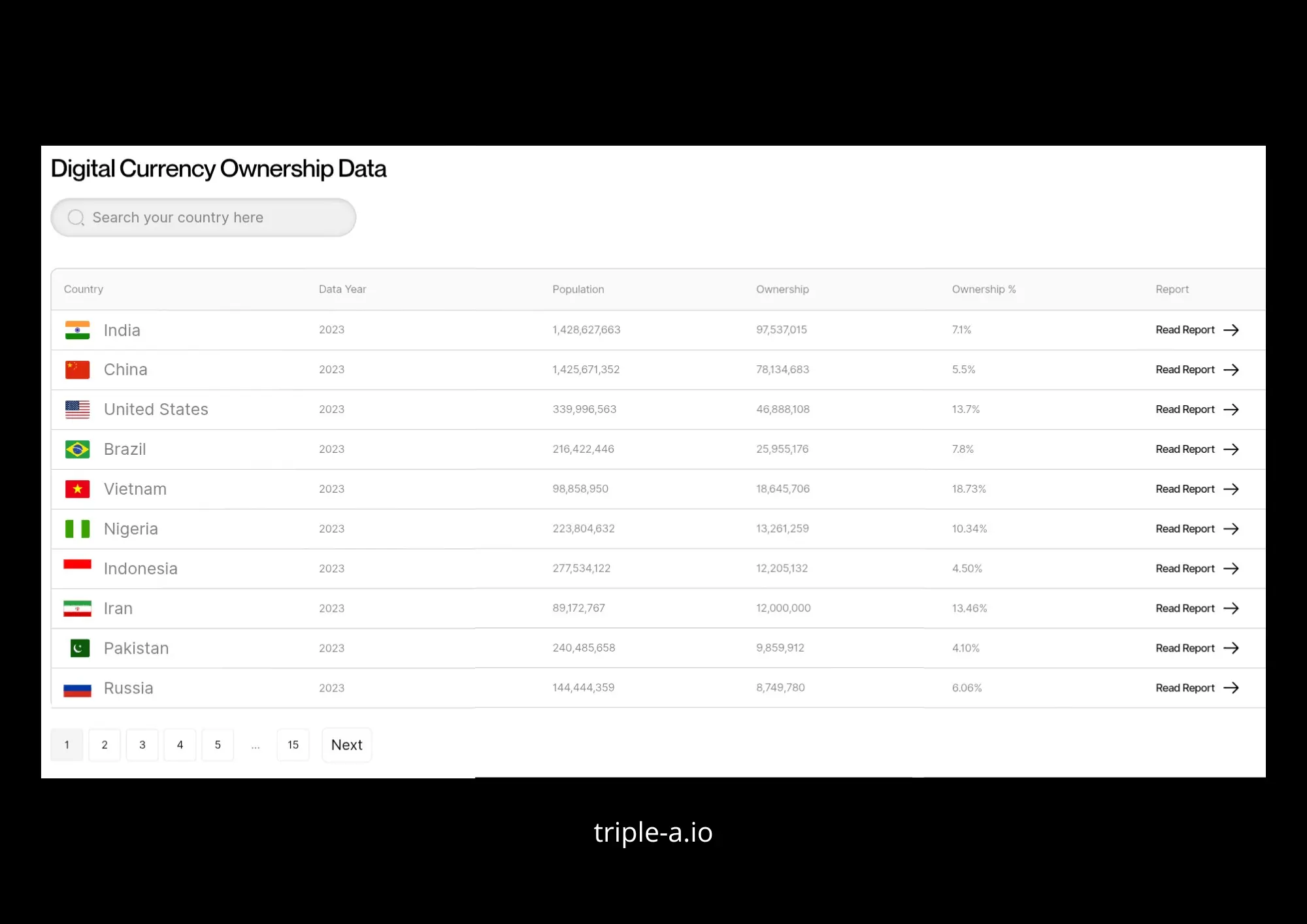
Statistically, about 80% of these retail participants belong to the generation under 34 years old. Since these younger traders frequently base their portfolio moves on social media trends found on Twitter or Telegram, the government feels that supervising online financial advisors is a necessary step to protect the public.
My Opinion
Taking a step back as a web3 enthusiast, this regulatory update presents two interesting perspectives. On a positive note, having clear boundaries and putting crypto under the direct supervision of a formal financial body like OJK shows that digital assets are being taken seriously. This is a bullish indicator for institutional trust because it elevates crypto from a speculative hobby to a legitimate financial sector. Curbing malicious actors who pump sketchy projects only to dump them on retail users will create a much cleaner market environment.
On the other hand, the sheer size of the fines poses an undeniable risk to independent educators. A penalty reaching Rp15 billion can easily scare away genuine content creators who just want to share educational insights. The community needs to watch closely how OJK handles the certification process. If the requirements become too heavy or expensive, it might choke grassroots web3 education and leave the space solely to massive corporations. Crypto was built on open access and shared knowledge. Hopefully, this framework serves to protect the traders rather than silencing the independent creators. Stay safe out there and always prioritize proper research before trading.
Click here to read my authentic and original analysis
Source






