
I am new to Publish0x and would like to share with you my photos of birds and other wildlife that I photograph as a hobby from my travels around the Eastern United States
A little about myself. My name is Michael from Pennsylvania, U.S.A. I became interested in photography about 5 yrs ago. I love being in the outdoors, hiking in the mountains, walking the beaches, being in local parks/recreation areas or just being in my own backyard. I thought this would be fun to photograph birds and other wildlife that visit my backyard or seeing and photographing the many different animals in the wild while hiking. I love being in the outdoors as much as I can, whether it be the dead of winter or in the dreaded heat of summer. For me, being in the outdoors is calm and relaxing except when you run into that one black bear by surprise :O:O:O
At first, like most people might think, I always thought a bird was just a bird. Especially those pesky House Sparrows :) :) :) As I got more invovlved into photographing birds in my own backyard, I noticed many different species of Sparrows and it took me quite a bit of time to begin to know and identify the many different species of Sparrows alone in my backyard visiting my feeders. I never knew there were so many different species of Sparrows. One of the first birds I photographed was a Field Sparrow
The clear, “bouncing-ball” trill of the Field Sparrow is a familiar summer sound in brushy fields and roadsides of the East and Midwest. The singer is a small, warm-toned sparrow with a rusty cap, neat white eyering, and pink bill. Though still common, Field Sparrows have declined sharply in the last half-century, partly because of the expansion of suburbs, where Field Sparrows will not nest. Populations in the prairies have remained strong thanks in part to measures like the Conservation Reserve Program. (Info from The Cornell Lab of Ornithology)
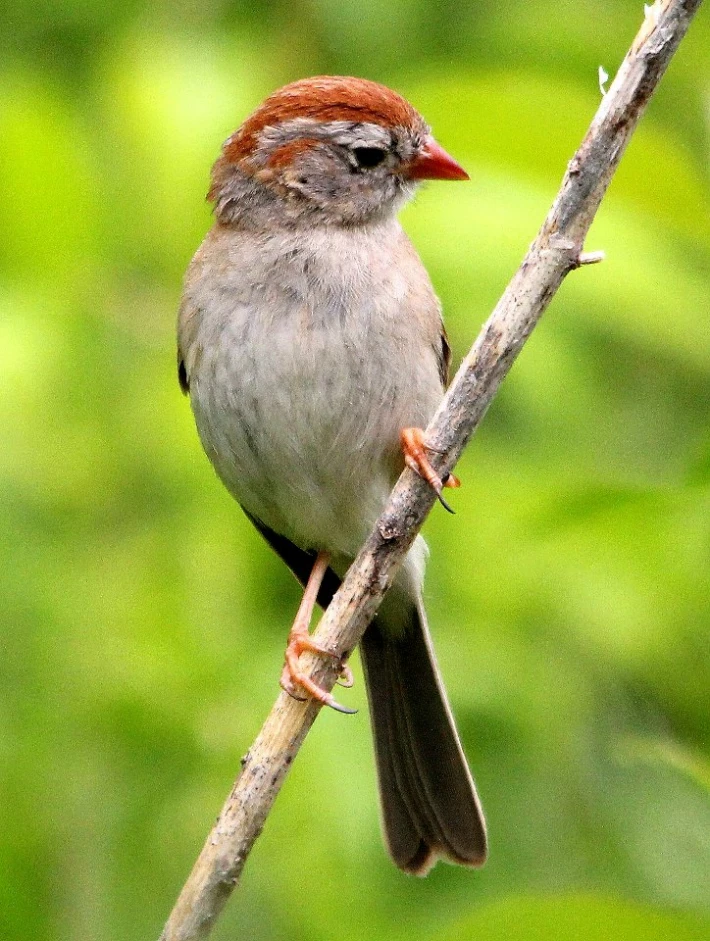
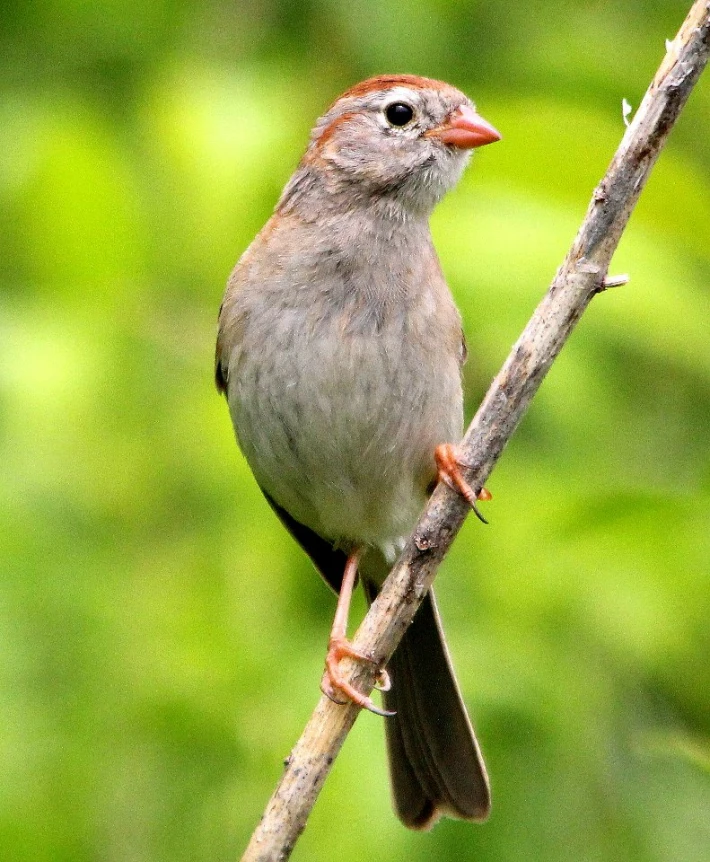
Some cool facts about the Field Sparrow taken from "The Cornell Lab of Ornithology". This website always provides me with new information on birds that I did not know
1. If a male Field Sparrow survives the winter, it usually returns to breed in the same territory each year. The female is less likely to return to the same territory, and young sparrows only rarely return the next year to where they were born
2. The male Field Sparrow starts singing as soon as he gets back in the spring. He sings vigorously until he finds a mate, but after that he sings only occasionally
3. Female Field Sparrows arriving on the breeding grounds may experience a rude welcome from males seeking a mate. An unmated male will often fly at and strike a female on his territory, sometimes driving her to the ground. Such an approach seems to seal the deal; by the following day the male is following his mate closely as she searches for a nest site
4. Field Sparrows often breed more than once a season. They build a new nest each time, building them higher and higher off the ground as the season progresses. Early spring nests are often on the ground, where they’re less visible. As leaves and groundcover grow the birds build their nests in bushes and trees, where they’re safer from snakes and other predators
5. Field Sparrows are vulnerable to parasitism by Brown-Headed Cowbirds, which lay their eggs in the sparrows’ nests. In some Iowa and Illinois study areas, 50 percent to 80 percent of all nests contained cowbird eggs. In areas with high rates of parasitism, Field Sparrows physically attacked models of cowbirds placed near their nests; where little parasitism occurs, the sparrows showed only a mild reaction to the models
6. In winter Field Sparrows may form mixed feeding flocks with other species, including White-throated and Song Sparrows. Smaller and less aggressive than other sparrows, Field Sparrows are usually at the bottom of the dominance hierarchy in these mixed flocks. Their subordinate role means that they may have to take extra risks to gain access to food, such as returning to a feeding site first after a predator has flushed the flock
7. The oldest recorded Field Sparrow was at least 10 years, 4 months old when it was recaptured and rereleased at a banding station in Maryland in 2007. It had been banded in the same state in 1999
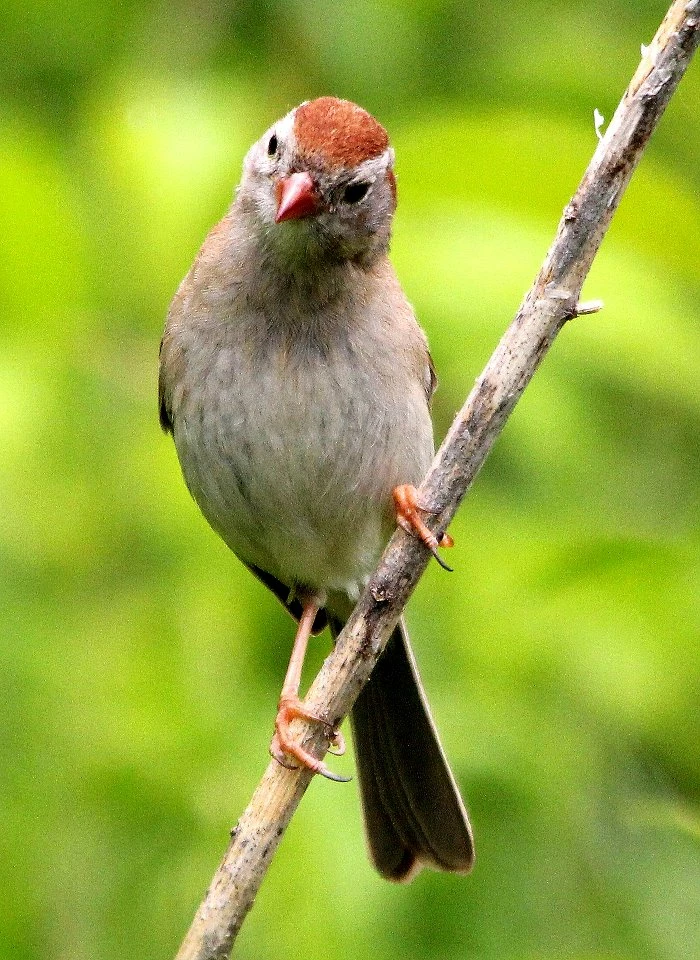
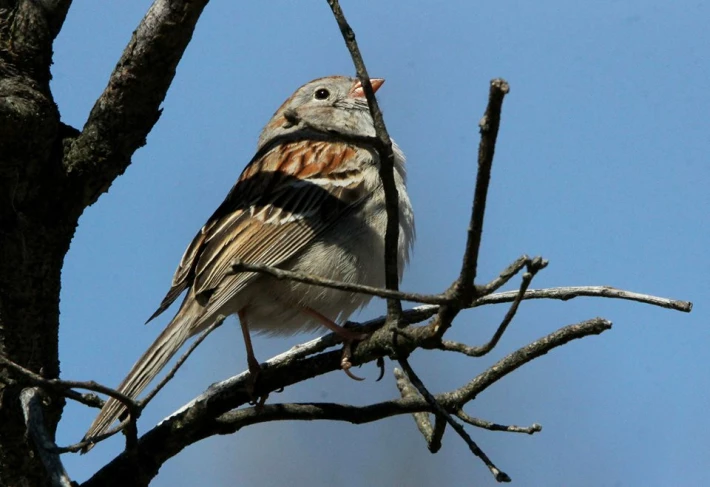
Anyway, this is one of the first birds I photographed about 5 yrs ago. Making these kind of posts will also help me to see my progression in bettering my photography by learning settings on my camera and also some editing. I hope you enjoyed my post and see the beauty of nature that is all around us
My camera equipment:
Canon EOS 60D body
Sigma 150-500mm f/5-6.3 DG OS HSM for Canon EF mount
Tamron SP 150-600mm f/5-6.3 Di Vc USD Lens for Canon
All photos are handshot, no tripod





