
First, let’s go back and review the recent price action that brought us to this range.
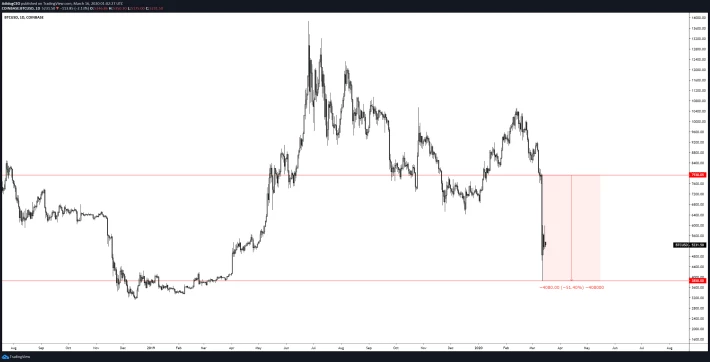
Bitcoin just had one of the worst drops in recent history and many believe it was due to the coronavirus outbreak that caused markets across the globe to crash.
After the initial drop following the open on March 12th, it stabilized for about 12 hours before going for another leg down to $3800 approaching the daily close only to rebound over 50% to $5800 to now settling in this $5–6k range.
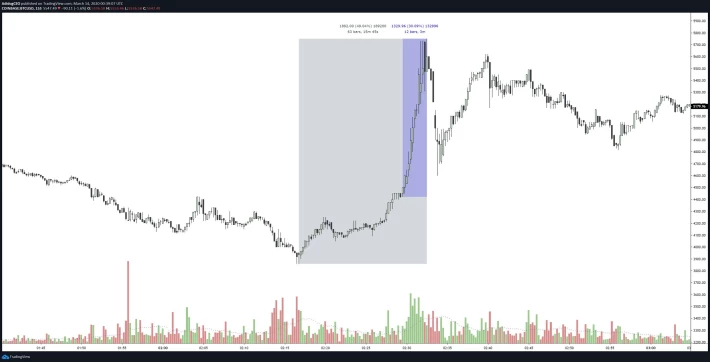
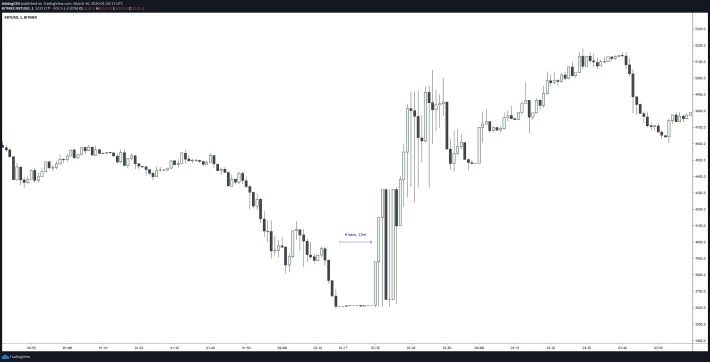
Bitmex books were so thin due to an overwhelming amount of cascading liquidated long positions that the exchange was shut down because of at first “Hardware Malfunction” then “DDOS Attack”.
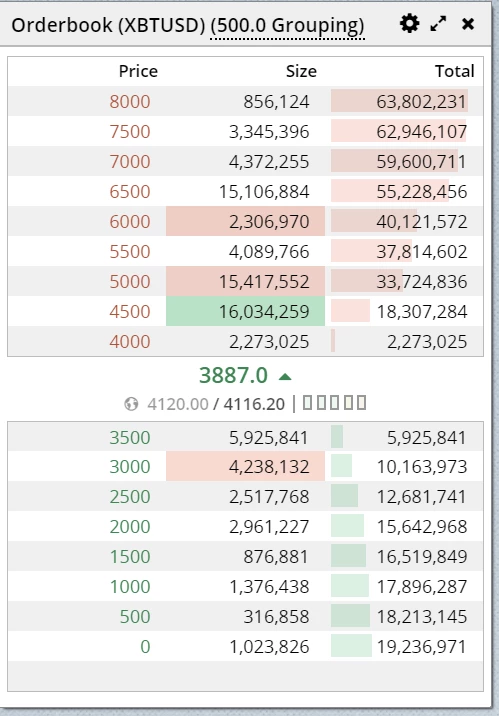
There are reports some people have been issued a refund on Bitmex for the recent price action around this time due to stops not properly triggering, absolute chaos.
Was the recent crash because of the coronavirus outbreak everywhere that has sparked panic due to the looming economic disruption across our globalized world?
Did bitcoin follow the crash of equities with investors and traders taking risk off the table?
Or was such a crash already coming towards bitcoin regardless of the coronavirus outbreak?
Perhaps it was this evil coronavirus but bitcoin was already showing signs of weakness and was on the verge of collapse several days before the crash on the 12th with the traditional markets.
The first clear sign of a potential leg down came from the weekend action before the drop where the CME futures markets created its 11th “Crater” (A very large price gap).
These downward craters are created when there is a large dump on the weekends while the CME bitcoin futures markets are closed but spot and other derivative platforms such as Bitmex continue to operate.
It is also known in the crypto twitter community as #Rektonopen.
There have only been two other downward craters since the inception of the CME bitcoin futures market.
The first was on 06/28/19 and the second appearance was on 07/12/19.
Although it’s a small sample size both previous downward craters as well as the most recent one share the same behavior of a period of consolidation with the crater acting as resistance and then another leg down in price.
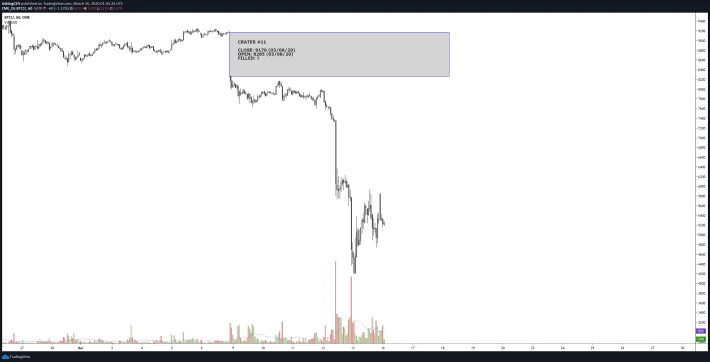
Bitcoin was already consolidating with signs of weakness before the equities sell-off and this was noticeable in the price action at smaller time frames leading up to the crash, the equities sell-off was simply a catalyst that sparked the fire.
The altcoin/midcap/shitcoin index markets which act as indicators of sentiment for bitcoin were all on the verge of plummeting as well.
If the traditional markets crashing was just a catalyst and not the reason for the recent drop, then what was?
The price of bitcoin was unsustainable at these elevated prices due to the nature of how bitcoins are created, the mining process.
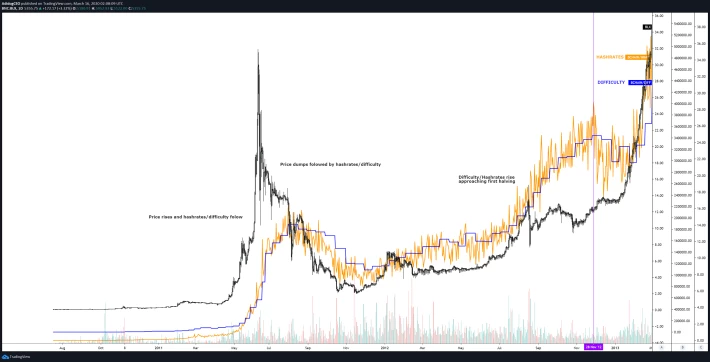
At the beginning and early days of bitcoin mining was done by mostly hobbyist miners and businesses in the creation of ASIC (Application-Specific Integrated Circuit) hardware did not exist yet.
Their relationship to price is much more noticeable back then as most market participants mined the bitcoins that they traded.
Fast forward to today we are at the cusp of the professional era of bitcoin mining where megawatt facilities that have raised money are in competition with each other for the most efficient energy sources across the world.
https://www.coindesk.com/highest-in-2-years-65-of-bitcoin-hash-power-is-in-china-report-finds
Most of the development of ASIC hardware is done in China along with the majority of the hashrates being run on the backs of cheap coal-powered energy sources spread throughout the country.
Although the scene is slowly becoming more decentralized with large operations opening up shop outside of China it still firmly remains in the control with the coalition of miners, ASIC manufacturers, exchanges and crypto funds that operate out of China or have relationships tying them there.
How much influence over the price does this coalition of industry heads in China have?
Well during one meetup of all the Chinese industry heads back in 09/23/19 when bitcoin was consolidating and hovering at $10000, this happened.
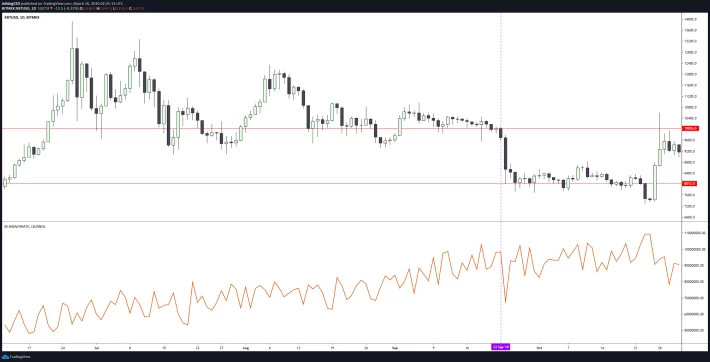
Perhaps it was just coincidence that the hashrates dropped over 30% with the price crashing 20% from failing to hold $10000 just randomly…
Sure tooth fairies also exist and Santa brings me presents every winter, although maybe not this year because of the coronavirus.
Why does all this matter and what does it mean?
Since the rally to $20000 from the bitcoin mania of 2017, the interest in bitcoin mining exploded.
Following the height of the bubble, PC Gamers couldn’t even purchase video cards and store shelves were empty with parts related to cryptocurrency mining selling out.
https://www.gamespot.com/articles/video-card-shopping-gets-wild-with-gpu-6-packs-due/1100-6456634/
ASIC companies such as Bitmain flourished selling their hardware for exorbitant prices to everyone rushing in to participate in the digital gold rush of mining bitcoin along with other shitcoins such as Ethereum.
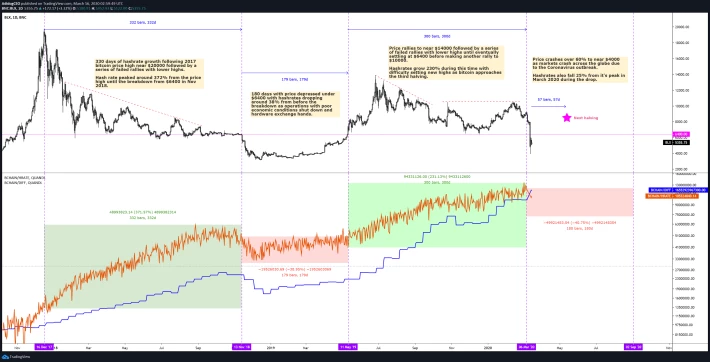
For over 330 days even with bitcoin losing nearly 70% of its value hardware continued to sell out and mining farms went up across the globe with every Bob and Joe raising money from their neighborhood to start a bitcoin farm.
Little did they know as they were joining in the next big thing as digital gold miners the profitability of mining bitcoins was shrinking as price continued to get depressed due to the large influx of mining entrepreneurs and their operation costs.
As the hype and demand faded with each failed rally so did the promises of Lambos and speculators realized that it may take more than a few months to achieve their goals, the never below $6000 support level was broken and with it the hopes and dreams of many.
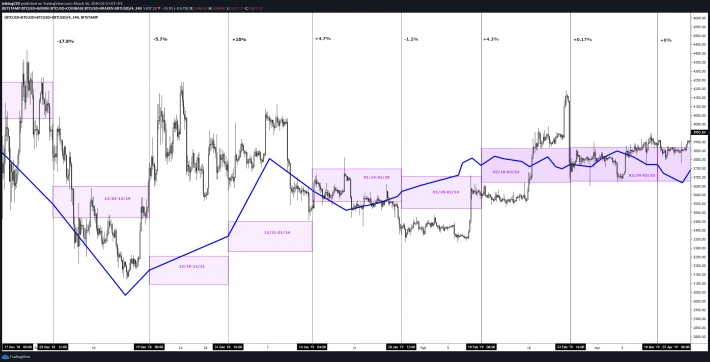
(Previous difficulty figures from this chart may slightly differ from actual changes)
Next came 180 days of depressed prices with the production cost of many miners dictating the price movements as difficulty wildly deviated and hardware exchanged hands.
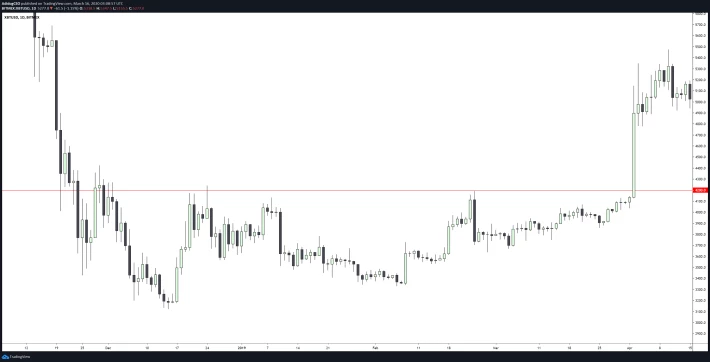
Hardware bought for $1500 or higher were being salvaged off for a few hundred as many threw in the towel with bitcoin failing to break back above $4200. It was becoming unprofitable for those with poor economic conditions and many did not have the cash reserves to weather the long dark winter that wouldn’t end.
In some cases the very companies that sold them the hardware were buying them back from their customers at 1/10th the price only to use it themselves or resell to more savvy miners.
Then like it was all some kind of cruel joke on April Fools’ Day of 2019, bitcoin finally broke above the $4200 resistance level and did a massive short squeeze while speculators in disbelief relentlessly shorted every bounce only to get liquidated and add fuel to the rally.
Within a matter of 85 days, bitcoin fueled by the disbelief of short-sellers had rallied to near $14000 and the dream was back alive.
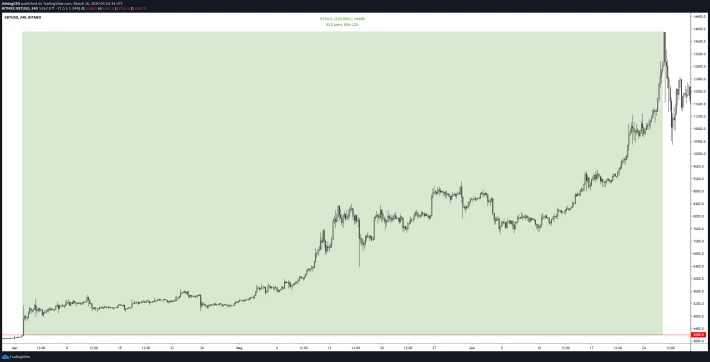
Bitmain along with several new ASIC companies out of China started debuting their latest advanced miners with the rally and the digital gold rush was back on, the halving is coming, it’s different this time…
Bitcoin was back and stronger than ever.
Even when it was looking to face another dark winter consolidating at $7200 in late October 2019, President Xi saved the day with a magnificent 43% pump announcing that China is all-in on cryptocurrencies.
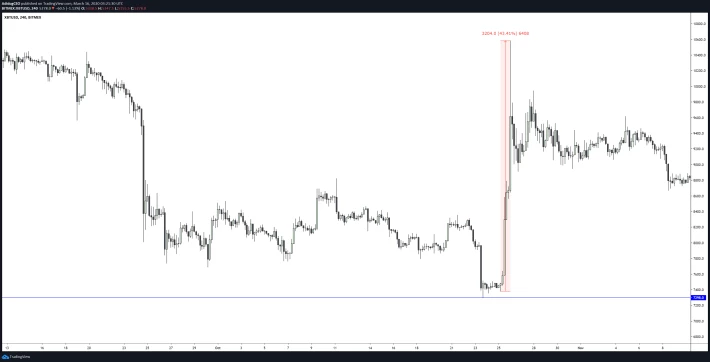
Over the next 300 days with the price forming the same pattern of failed rallies with lower highs just like in 2018, the bitcoin hashrate and difficulty increased by over 230% at its peak.
Fast forward to today with bitcoin difficulty and hashrates at all-time highs and the halving just around the corner which will double the production cost of bitcoin for miners. Things aren’t looking so great for the latest round of digital gold entrepreneurs that boarded the recent rush.
Let’s go back to this chart now that we’ve gone down memory lane…
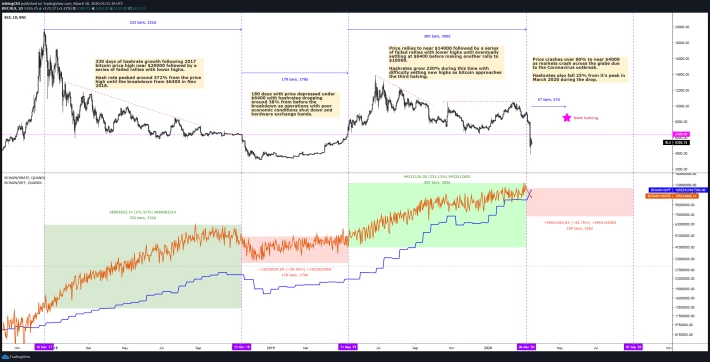
Hashrates have already dropped roughly 25% from all-time highs in March in a matter of days and difficulty is slated to drop between 6–8% along with it around the 24th.
It’s the same painful story for those with poor economic conditions and paid exorbitant prices for their hardware during the recent digital gold mining rush.
They are faced with extreme uncertainty and if bitcoin crashing wasn’t bad enough they also got to worry about the coronavirus sending the global economy into a worldwide recession with everyone selling everything they can for cash and a doubling of production costs thanks to the halving.
Where will the demand come from with bitcoin being viewed as a risk asset?
How long can bitcoin miners continue to produce without selling into the market with the halving fast approaching roughly 57 days from today?
Well…
Nothing is certain especially in current world conditions but if you ask me… We are likely to see a prolonged period of the price being depressed much like the crash in late 2018 where hardware will exchange hands and only the fittest will survive while others bleed out.
Except for this time on top of similar market conditions like the previous crash in late 2018 and early 2019, the halving will double the cost of production soon and the coronavirus is wreaking havoc across the world.
If I were to take an optimistic view, I would say perhaps we recover by Q4 of 2020 and start to rally with a similar short squeeze of all the bitcoin is dead folks.
/THE END
- Adidog CEO
Here’s a bitcoin address if you enjoyed my article: 172mBB2dBrY7pfKrFDC6SLa5982W8CF2qm






