![Bitcoin: What do you need to know? [A Guide To Understanding Bitcoin]](https://www.publish0x.com/img/141491.webp?action=resize&ar=1&enc=webp&inv=0&ori=1&st=1&up=1&w=1140&signature=818054cebf4d8e950febd8dd766301a7f17d5e8f237bdb76150480d728681839)
Bitcoin! Everybody's talking about it! But what is it exactly? What can you do with it? How can you make money with it? And what are the benefits, the risks, and the pitfalls of bitcoin? In this article, we explain in simple language everything you need to know about bitcoin.
What's bitcoin?
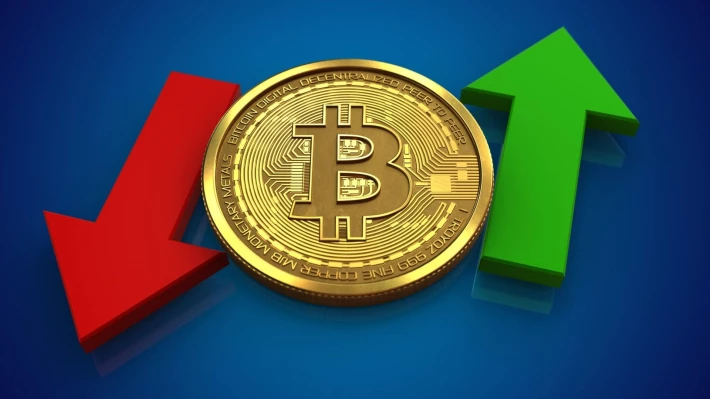
Bitcoin is the first decentralized digital currency. It's digital money. In the online world, the English term of digital currency is often used: cryptocurrency. Digital money means that the coins are virtual: you cannot see or touch them. You only need a computer to use bitcoin, because bitcoin is essentially a piece of software. The abbreviation of Bitcoin is BTC.
What are the advantages of bitcoin?
- Bitcoin allows you to send money online from one person to another without the intervention of a third party, such as a bank. This gives people complete control over their money. For example, you can use bitcoin to buy products and services online from web shops that accept bitcoin.
- When sending bitcoins, less transaction costs are paid than for international transactions via the bank.
- Bitcoins can be used in any country in the world. Bitcoin is borderless because it is global and cannot be stopped by a single country.
- There are no particular requirements you need to meet to get started with BTC. You can start right away. Especially in poor countries, which have to deal with high inflation, the popularity of bitcoin is growing. Think of Zimbabwe or Venezuela. In these countries BTC is often a better way to send or receive money than the national currency.
-
Bitcoin is decentralized. We can all remember the banking crisis of 2008, where some banks collapsed. In fact, the growing popularity of BTC is also a reaction to this crisis; it puts banks out of action. Bitcoin is the financial system for and by ordinary people. Decentralized means that bitcoin is not owned by one central authority or government. There is not one person or authority that owns the network. The network belongs to all bitcoin users worldwide.
- The technology is open source, so that everyone can see the source code. Every programmer in the world can investigate the underlying technology for themselves.
- Each user has his own bitcoin address. This allows you to send and receive bitcoins worldwide. A bitcoin address is not linked to your name, so you can use BTC relatively anonymously.
- Bitcoin transactions are irreversible. They cannot be reversed by anyone. Once you have sent your BTC, you can only get it back if the recipient sends it back. This way, you can always be sure that the money arrives. This can also be checked publicly in the blockchain. So the receiver of the bitcoins cannot claim that he never received the money.
You might think that the lack of central supervision leads to chaos, but that is absolutely not true. This is because the technology behind bitcoin, the blockchain, is one of the most revolutionary inventions of the 21st century.
How does the blockchain work?
Blockchain is the technology behind bitcoin. These two terms are sometimes used interchangeably, but that is incorrect. Although the two are related, they have a different meaning.
With the blockchain, all bitcoin transactions are made public in a public ledger. All transactions in this general ledger are accessible to everyone. This is different from, for example, the general ledger of a bank or government, where there is a central administration that has access to the general ledger and manages it. The public nature of the blockchain increases user confidence in the network, promotes transparency and prevents fraud. Transactions are bundled in batches, so-called blocks. Each block refers to the previous block, so the blocks form a connected chain, or blockchain.
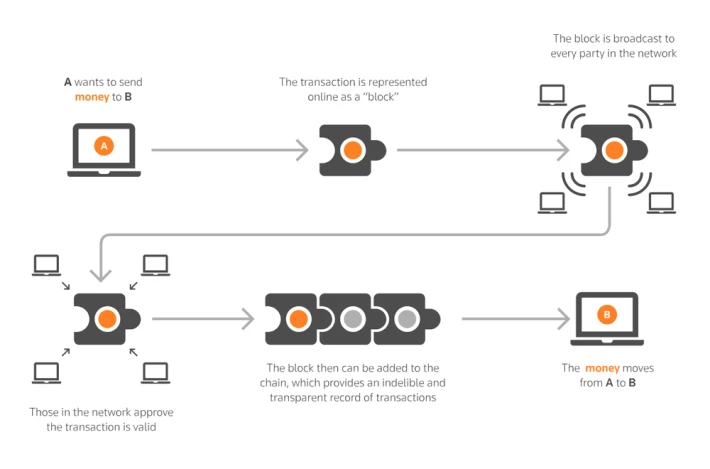
The blockchain is continuously updated to accurately reflect the amount of bitcoins per bitcoin address at any given time. The blockchain is stored on millions of different computers worldwide. So there is no central original copy of the blockchain. It's decentralized. Transactions in the blockchain are verified by a decentralized network of users. They check the transactions, so bitcoins cannot be issued twice by the same person. These users get new bitcoins to verify transactions. After transactions are checked, the block is added to the blockchain. Finally, the blockchain copies are updated worldwide with the latest transactions.
You can see the current state of the blockchain on blockchain.info. Here you can also find all transactions.
The cryptography behind bitcoin
When you create a bitcoin address, it consists of two parts: a public bitcoin address and a secret key. You can give the public address to anyone, so someone can transfer money to you. But the key is yours only and you must never give it to anyone else. The key is used by the system to sign transactions. The cryptography behind bitcoin takes the amount, the public address of the sender and receiver and the secret key and performs a mathematical calculation. This results in a unique signature. This signature ends up in a block of the blockchain, together with other transactions. Due to the way cryptography works, other people can mathematically determine that the person who generated the signature must indeed have the secret key. It is not possible to reason back from the signature what the secret key was. That would take a supercomputer thousands of years. Perhaps in the future, with the rise of quantum computers, that will be different.
How do you buy bitcoin?
There are several ways to buy and sell bitcoin for euros. Bitcoins can be divided into pieces, so you don't have to buy a whole BTC. For example, you can buy 0.04 bitcoin. for example, you can buy bitcoin at: Coinbase.
When you buy bitcoin from one of these sites, you have to send your bitcoin to a wallet. This can be an online or offline wallet. When it comes to online exchange, we recommend Binance. For offline storage we recommend Jaxx (software) or the Nano Ledger S (hardware). In our article on how to buy bitcoin, we go into this in more detail.
How can you make money with it?
Once you've bought bitcoin, you can hold on to it and hope the value increases over time. Although the value of BTC fluctuates daily, the general trend line of the bitcoin value has always increased since the beginning. Besides that you can also buy other digital currencies with BTC. Think of ethereum, ripple or monero. If these currencies rise in value, you can sell them higher than you have bought them. That way you can make money. This makes Bitcoin a kind of gateway to trade in other cryptocurrencies.
How are bitcoins made?
Bitcoins are digitally generated and stored, using cryptography. The generation of new coins is done by computers that solve mathematical calculations using software. Each time a computer solves a mathematical puzzle, it receives a reward in the form of bitcoin. Solving these mathematical puzzles is called mining. Miners get a bit of BTC as a reward. The more often puzzles are solved, the more difficult the puzzles become. This makes it more and more difficult to generate a bitcoin with time. The first bitcoin was mined on January 3, 2009 and this first block is called the genesis block.
In principle, anyone with a computer can mine bitcoins and other digital currencies. However, in the early years of bitcoin it was more profitable than it is now. The cost of electricity usually does not outweigh the value of the BTC you generate by mining. Because the difficulty of cryptographic puzzles increases with time, miners use more and more powerful computers. Some miners join forces by working together in so-called mining pools. Also, miners are increasingly moving to countries with cheap electricity costs. Many miners operate from China, for example. It's difficult to compete against this with your normal laptop, which in practice means that they get more BTC than you do, and you spend a lot of money on electricity.
How are bitcoins stored?
Unlike money, you can't keep digital money in the bank. Bitcoins are stored in a wallet. A wallet address consists of a combination of about 30 letters and numbers. A wallet can be seen as a personal safe in which you can store digital currency. This can be on your computer, on the phone, or in the cloud on an exchange website. However, security is an issue when you store digital money on an exchange website. Occasionally, exchange websites are hacked and people lose their money. Nowadays there are special hardware wallets, meant to keep your bitcoins and other digital coins safe.
What are the disadvantages of bitcoin?
Sounds all very positive that bitcoin, but nothing is perfect. That's right, the digital currency also has its disadvantages:
- There are slow transactions in the bitcoin network. It can sometimes take several hours before a bitcoin you have sent arrives at the receiver. Because of this, bitcoin is currently not scalable for use on a larger scale. For example, PayPal, Visa or Mastercard can handle many more transactions per second than BTC. After all, if you could pay for your messages in bitcoin at the local supermarket around the corner, they won't wait an hour for confirmation that you actually paid. There is currently a discussion in the community about the best way to solve the problem of scalability. However, people have different opinions about this, and there is no consensus in the community. This has led to the birth of bitcoin cash in August 2017. This is a breakaway of bitcoin, with specific adjustments to become faster and more scalable. These adjustments did not match the views of other people in the community, so bitcoin cash split from the original bitcoin.
- Bitcoin has relatively high transaction costs compared to other cryptocurrencies. You can often set the amount of transaction costs yourself, but lower transaction costs mean that it takes longer for the money to arrive. The amount of transaction fees is independent of the amount of BTC in that transaction. Because of this, the transaction costs can seem both very low and extremely high, depending on the transaction amount. However, the average transaction costs of bitcoin beams are higher than, for example, those of other currencies, such as ethereum.
- There are extreme price fluctuations, i.e. there is high volatility. Because of this, the currency is not yet suitable as a means to get your salary deposited, for example. After all, nobody wants their salary to be paid in bitcoin if there is a chance that your salary will be worth 15% less the next day.
It can also be risky to keep your bitcoins on an exchange website. For example, Mt Gox, the largest exchange website in the world, went bankrupt in February 2014 due to mismanagement. Many people lost their money. There are also examples of exchange websites that were hacked, such as Bitfinex in 2016, causing people to lose their money. Although these are not disadvantages of bitcoin itself, they are risks associated with storing digital money on exchange websites.
Bitcoin: currency or digital gold?
Bitcoin started as a means of payment. However, the currency attracted investors when it appreciated significantly in May 2011 and November 2013. That's why many people buy bitcoin as an investment rather than as a means of payment.
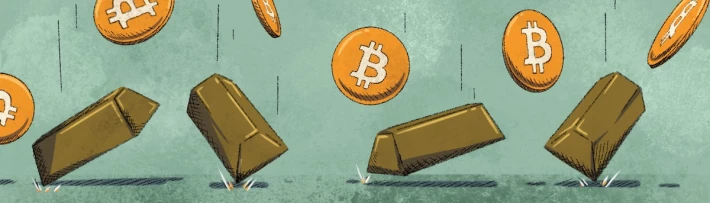
Bitcoin currently has some shortcomings, which prevent the currency from becoming mainstream on a large scale (see above). As a result, there is a debate in the community about the role that bitcoin should have: that of currency or that of digital gold. More and more people are writing off bitcoin as a currency and attributing the role of digital gold.
Bitcoin, like gold, usually rises in value in times of geopolitical tensions. Investors see the currency as a safe haven in times of uncertainty. There is also a finite supply and thus scarcity. For goods that are becoming increasingly scarce, the price will increase over time according to economic theory.
However, not everyone believes that bitcoin represents the value of digital gold. For example, Goldman Sachs argues that the volatile price and the danger of hacking ensure that the digital currency does not take on the role of digital gold. There is therefore no guarantee that the value will continue to rise in the future.
Who invented bitcoin?
Bitcoin was created in 2008 by a Satoshi Nakamoto. He published a nine-page document describing bitcoin. Satoshi claimed to be a 37 year old man living in Japan. However, doubts soon arose because of his perfect English and the fact that there were English comments in his code. Because of this, most people think that Satoshi Nakamoto is a pseudonym. Nobody knows for sure who Satoshi Nakamoto is, although there is a lot of speculation online. However, all persons mentioned in these speculations have publicly denied being Satoshi. Satoshi was involved in the development of bitcoin until 2010, after which it passed it on to others. He has been without trace ever since. The true identity of Satoshi is the biggest mystery in the bitcoin community.
The Ancestors of bitcoin
Before Satoshi came up with bitcoin, other people were already working on digital currency. There was already Hashcash by Adam Back in 1997, Wei Dai invented b-money in 1998 and Hal Finney had designed the Reusable Proof of Work system in 2004. Nick Szabo had also devised a decentralised digital currency in 1998, which he called bit gold. Bit gold is often seen as the direct precursor of the bitcoin. However, bit gold did not yet have the right technology to make the currency scalable. For example, bit gold had not yet solved the 'double spending problem', which means that a digital currency can be issued more than once by the same person. For example, if you issue a digital coin, and while waiting for confirmation, the same coin is issued somewhere else, the system needs to know that you have already issued the coin and can no longer use it. The solutions to this problem can be categorized into centralized and decentralized. Centralized solutions rely on a reliable third party checking whether a coin has already been issued or not. The disadvantage of this is that such a central party quickly becomes the target of hackers and that a hack has serious consequences for the reliability of such a party. This is a serious problem and the technical knowledge to solve it is far-reaching. Satoshi was the first person to solve the double spending problem in a decentralized way, creating bitcoin. This made BTC the first decentralized digital currency in the world.
The history of bitcoin
On 18 August 2008 the domain name bitcoin.org was registered . On October 31, 2008 a link to Satoshi's bitcoin whitepaper was mailed to a mailing list of cryptography enthusiasts. The bitcoin network was created in January 2009 when the first open source bitcoin software was released. The first bitcoins were also produced at that time. The first bitcoin transaction took place on the same day that the bitcoin software was released in January 2009, when Satoshi sent 10 bitcoins to Hal Finney. It was unclear how much a bitcoin was worth in the beginning. The value of bitcoin was negotiated on the Bitcointalk forum. The first commercial transaction took place in May 2010, when someone paid 10,000 bitcoin for two pizzas. The 10,000 bitcoin of the pizzas are now worth more than 100 million dollars.
The first other cryptocurrencies besides bitcoin were created in 2011. The digital currency also became increasingly popular on the deep web. Wikileaks started accepting bitcoins for donations in June 2011. In 2012, the currency became more widely known. The European Central Bank wrote its first report on digital currencies in October 2012, in which bitcoin was extensively mentioned. In November 2012 WordPress started accepting bitcoin payments.
In 2013, the currency went truly mainstream for the first time. The price of bitcoin went from 13 dollars in January 2013 to more than 1000 dollars in November 2013. In 2014 the currency depreciated again. At the beginning of 2017, however, the value started to rise again, after which it reached a record price of $20.089,00 at the end of the year on December 17, but then the price crashed. More and more companies are accepting bitcoins as a method of payment. (Data from CoinMarketCap)
What's a satoshi?
Bitcoin can be divided into smaller quantities. The smallest quantity is called a satoshi, named after its founder, Satoshi Nakamoto. 1 satoshi equals 1/100,000,000th bitcoin. Because the value of BTC is constantly changing, the value of 1 satoshi naturally changes with it. When you start trading bitcoin for other coins, the value of other coins relative to the bitcoin is expressed in satoshi. This makes it important to understand how this works before you start trading.
What is the price of a bitcoin?
The price of bitcoin fluctuates daily. In that respect, it is a very volatile currency. Some price highlights:
In April 2013, the price was above $100 for the first time.
In November 2013 the price came above $ 1000 for the first time. The price then remained below 1000 dollars for a few years, and rose above 1000 dollars again at the beginning of 2017.
In May 2017 the price was above 2000 dollars for the first time. Since then the price has risen sharply.
In October 2017 the price reached 5000 dollars for the first time.
In November 2017 the price reached the magic limit of 10,000 dollars for the first time.
In December 2017 the price of bitcoin passed the 20,000 dollar mark. (Data from CoinMarketCap)
How is the value determined?
The value of bitcoin, like the value of other currencies, is determined by supply and demand. The more demand there is, the higher the price. If the demand decreases, the price decreases. The supply is determined by the amount of coins in circulation and the demand is determined by the market capitalization. The more money there is in a currency, the higher the value of the currency. The bitcoin protocol has a maximum of 21 million bitcoin that can be issued. Currently there are about 18.3 million of these in circulation (i.e. supply). There cannot be more bitcoins than the maximum. As a result, bitcoin is not subject to inflation, unlike, for example, the euro, which becomes worth less if more euros are printed by the European Central Bank (ECB).
Because bitcoin is a relatively new market and has relatively little money in it (compared to other asset classes, such as gold), no significant amounts of money are needed to raise or lower the value of the digital currency. As a result, the price of bitcoin is still very volatile at the moment.
A bitcoin inherently has no value, it's just a piece of code. However, people assign a financial value to that piece of code. With that piece of code, you can make payments in bitcoin. If companies accept that piece of code as a form of payment, then a bitcoin has value. Bitcoin can be traded on exchange websites. Here you can sell your coins to others. So a bitcoin is worth as much as someone else is willing to pay for it. In that respect, the coin is a perfect example of the greater fool theory: people buy a bitcoin for $20,000 and expect to be able to sell it in the future to a 'bigger fool' who is willing to pay more for it. In theory, it could happen that your bitcoins won't be worth anything in the future because no one is willing to pay for that piece of code anymore. However, of course, nobody can predict the future.
How anonymous is bitcoin?
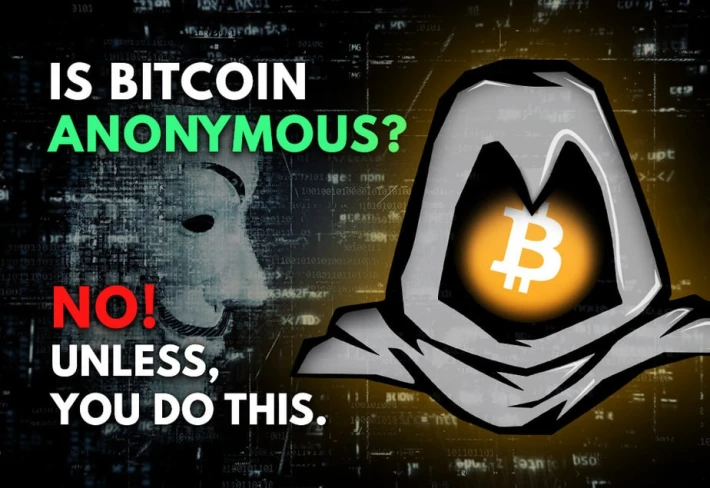
When you create a bitcoin wallet, you don't have to give your name anywhere. And you can create multiple wallets per person. So your specific account can't just be linked by everyone to your name or home address. However, all transactions in the blockchain are transparent. Everyone can see how much bitcoin a specific bitcoin address has, and which transactions this address has performed in the past, but an address cannot just be linked to you as a person. This makes the use of bitcoin relatively anonymous. Users can send and receive payments with a reasonable level of privacy and anonymity. Some people like the fact that their personal finances cannot be tracked by others, but others find that this anonymity encourages the use of bitcoin for illegal purposes, such as drugs or terrorism.
However, many exchange websites or websites where you buy digital money ask for a copy of your ID card. In some cases, this allows the police to find out the identity of people in case of illegal activities.
There are, however, other cryptocurrencies that distinguish themselves from bitcoin in terms of privacy and anonymity, such as Monero. So bitcoin is not the most anonymous cryptocurrency there is.
Why are some people critical about bitcoin?
Bitcoin regularly makes negative news. The criticism can roughly be divided into the following main categories:
- Investing in the digital currency is risky. Exchange rate volatility per day can be considerable and the product is technically complicated. Many people have bitcoin, but actually have no idea what it is. They don't understand the product they have invested in. In the market there is also deception, fraud and manipulation by some parties. There is also no regulator that deals with the cryptocurrency market. As a result, the Netherlands Authority for the Financial Markets (AFM) and the Dutch Bank warn investors of the risks involved in investing in digital currencies. The AFM sees similarities with earlier bubbles (bubbles). The cryptocurrency market is as yet unregulated. The fact that the playing field is global makes it difficult to regulate the market effectively.
- Bitcoin is a disruptive innovation that poses a direct threat to banks and financial service providers. Banks make a lot of money from the transaction costs they charge for sending money. No wonder many bankers are critical of bitcoin, because their future is at stake. The digital currency is a direct attack on the business model of banks.
- The anonymous nature of bitcoin has also made it a popular currency in criminal activities. Bitcoin is used by some people for tax evasion, buying illegal goods or money laundering. As a result, some people associate the currency with illegal business. However, money in general is always used for both legal and illegal practices in our society.
- You should know what you're doing when you're currently trading in digital currency. It's not for everyone. You can lose all your money with one wrong click. You can also be hacked. And then you are not insured anywhere. Because of this, some people warn that bitcoins are not for everyone (at least, not now, until it becomes easier and more user-friendly to buy/sell/use them).
- The bitcoin network uses an enormous amount of electricity. Minning bitcoins consumes more electricity each year than the whole of Ireland consumes. As a result, the production of the digital currency is an attack on the environment. Current electricity consumption figures can be found on Digiconimist and PowerCompare. Proponents of bitcoin point out that the current financial system emits much more. Think, for example, of the millions of employees of banks worldwide who go to work by car every day, or the electricity costs of the skyscraper headquarters of large banks. However, the community is looking for more environmentally friendly ways to reduce emissions.
Conclusion
Bitcoin is a cryptocurrency with a lot of potential. Although the digital currency has many advantages, high transaction costs and slow transactions are some of the drawbacks. Technically better currencies have been developed, yet bitcoin remains the king of the digital currency for the time being. No other currency has the name recognition or market capitalization of bitcoin. However, there are also risks involved in buying the currency. Make sure you are aware of these risks before you buy bitcoin.
We'll have to wait and see what happens in the future. Both in terms of regulation by governments and adoption. To truly become a mainstream payment instrument, bitcoin still has many challenges to overcome in terms of scalability. It also needs to become more stable. This means that there will no longer be large daily price fluctuations. So it will take some time before we can pay for our groceries in bitcoin at the local supermarket.





