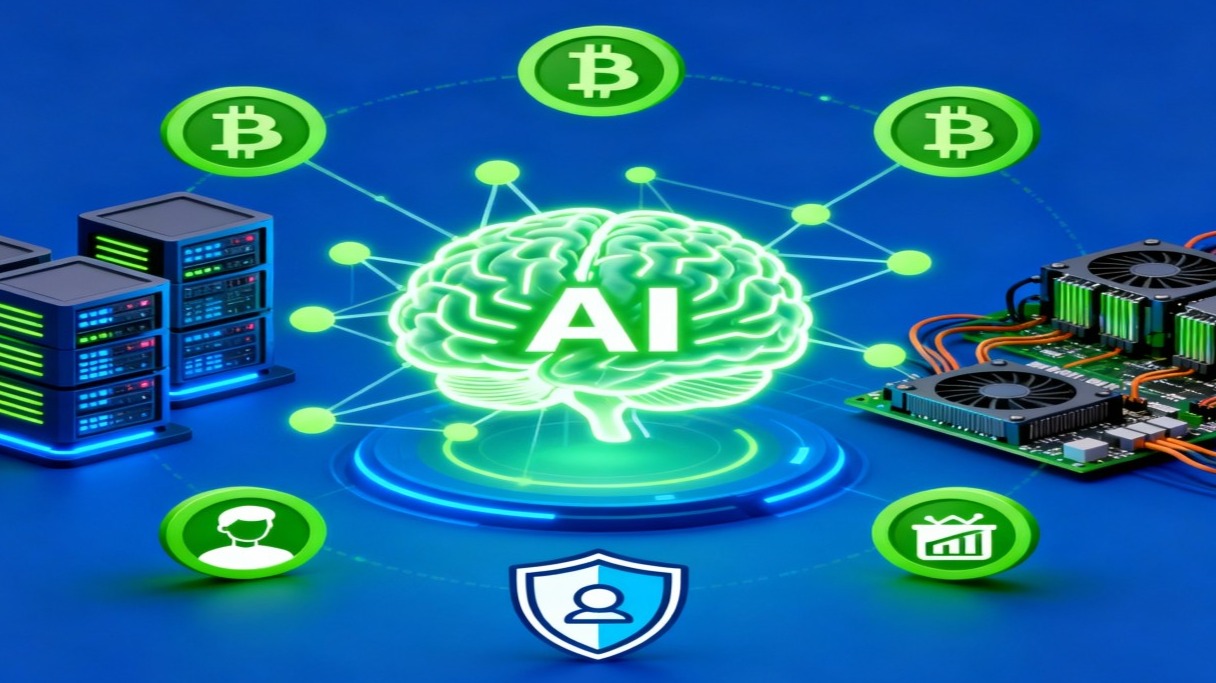
In recent times, since 2022, AI has been a centralized innovation, where very few "Big Tech" giants are dominating in this field. The Big Tech companies have ownership over these LLM models, where the rented amount of data is providing out access to the tremendous amount of computational resources. Although Tech giants are making some plans regarding the introduction of decentralized AI, however, this trend has already begun to emerge at the end of 2025 from the crypto space.
The goal isn’t simply an idea for a whitepaper; it’s an accelerating ecosystem that has been launching numerous tokens and protocols to create a whole new set of AI technologies and crypto assets for generating an alternative open source decentralized LLM, which should have the capability to maintain a monopoly in the AI market.
Let’s have a look at this newly introduced trend,
A. What is the Decentralised AI (DeAI):
Decentralized AI has three main advantages:
1. First, Decentralized AI is distributed; this means the energy required (and therefore the size of the central data center) can be broken up so that one central data center does not need to be created to support a single application.
2. Second, Decentralized AI encourages contribution through the use of cryptocurrency as compensation for those who contribute their data globally, develop code to improve an application, or allow access to their computer's processing capabilities.
3. Third, Decentralized AI allows users to maintain control over how their data is used, while maintaining their privacy; the use of cryptographically based algorithms enables users to create artificial intelligence models from the data they have provided, without having to give up their rights to that data.
The decentralized AI movement has spawned multiple sub-movements in several areas, each with its own new entrants and growing interest [1].
B. Decentralised Compute - A New Type Of Race
AI is hungry for electricity. It has the biggest bottleneck in terms of the number of high-end graphics processing unit (GPU) needed. Most of these were purchased by large, centralized companies; therefore, there is now a severe shortage [1,5].
C. Crypto's Solution To The Problem Is An "Airbnb For GPUs"
An open-source, decentralized system that provides individuals- from gamers who have unused 4090 cards to small data centers- the ability to rent out their excess computing power, and receive cryptocurrency as payment. Developers of AI applications are able to obtain, on demand, access to a global supercomputer at a fraction of the cost that would be required using traditional methods [1,5].
D. Cocoon - A New Decentralized Compute Platform
This month, the newest and most significant announcement in this space was made by Telegram's CEO: Cocoon, a decentralized compute platform based on The Open Network (TON), is scheduled to launch in November 2025. Cocoon is paying GPU users in Toncoin (TON) to use their computers for private AI processing. As Telegram is its largest client, utilizing the company's millions of users as its initial customers, Cocoon is likely to represent the first serious challenge to the existing centralized providers of compute services such as Amazon Web Services (AWS) [2].
E. Open Marketplace - AI Model Thinking on a Blockchain
Compute is the electrical energy - AI models are the appliances. The second major DeAI trend is developing an open marketplace through which AI models can be developed, distributed, and monetized.
F. Concept
Instead of a company owning a single large model (GPT-4), it will be a "pure market place for intelligence," whereby multiple AI models, each having a unique skill set, will compete and collaborate within the blockchain. The network will reward them based on the quality/value of their responses [2,6].
a. Leading Project
Bittensor (TAO) appears to be leading this trend. Bittensor operates as a decentralized brain. Machine learning models will plug into the Bittensor network. The highest performing models (the ones providing the most valuable intelligence to the network) will receive TAO tokens. This creates a global 'survival of the fittest' for algorithms, and aims to expedite the path to better AI [3].
b. The Application Layer:
Using Artificial Intelligence to Build More Efficient Decentralized Finance (DeFi) and Trading Schemes.
- The concept: Many investors have been exposed to what is likely their first and newest application in the world of cryptocurrency: using artificial intelligence to make it easier to use and generate a profit from cryptocurrency [4].
- How This Works: These projects integrate AI-powered tools directly onto DeFi platforms. Think of AI as a copilot to assist you with all of your trading needs; an AI assistant that assists you in identifying new opportunities by analyzing on-chain data, or performs multi-blockchain transactions for you [4,6].
- c. New Trends: There have never been more "AI-DeFi" presales than there are right now. For example, Blazpay (BLAZ) was recently launched and has already gained traction with investors who believe that they will be able to use an AI assistant to create one platform to manage their entire portfolio, to automatically trade between multiple blockchains, and to assist developers in creating new AI-based applications with their software development kit (SDK).
G. The AI Super Alliance:
This is the obvious sign that the trend has matured – and it was made possible by the recent large-scale consolidation of legacy AI crypto projects.
a. The news:
Three of the oldest and best-known AI crypto projects – Fetch.ai (FET), SingularityNET (AGIX), and Ocean Protocol (OCEAN) – are now officially part of a super-alliance of legacy AI crypto projects [5].
b. The new token: They are now represented as a single new token called "Artificial Superintelligence Alliance" (ASI) with the same ticker of FET. However, FET will represent the combined value and technology of each of the three. Late in 2025, the above three entities were formally consolidated into one single, powerful, decentralized entity that has the sole mission of developing an Artificial General Intelligence (AGI) that is free from corporate control [5].
c. A New Wave of Cryptocurrency Has Arrived:
The first wave of cryptocurrency focused on decentralized money (i.e., Bitcoin), while the second wave focused on decentralized applications (i.e., Ethereum)- and now we have a new third wave that focuses on decentralized intelligence [6,7].
This new category of cryptocurrency is positioned to create open markets for the three core elements that are needed to build artificial intelligence (AI): compute, data, and models; thus positioning this new category of cryptocurrency to be the foundational infrastructure for an intelligent, open, private, and user-owned future [6,7].
H. References:
[1] Gravity Team. "Decentralized AI: How Crypto and AI Are Shaping the Future." Gravity Team Blog, (Accessed October 30, 2025).
[2] ZebPay India. "Top 5 AI Crypto Coins Of 2025: Best Investments Now!" ZebPay India Blog, (Accessed October 30, 2025).
[3] CoinMarketCap. "TON Powers New Decentralized AI Network Paying GPU Owners." CoinMarketCap Academy, October 30, 2025.
[4] DemandSage. "9 Best AI Crypto Coins in 2025 (By Market Cap)." DemandSage, September 3, 2025.
[5] GlobeNewswire. "Blazpay AI Crypto Presale Nears $1M – Less Than 24 hours Before Phase 3 Price Increase." GlobeNewswire, October 30, 2025.
[6] Koinly. "10 Best AI Crypto Coins (October 2025)." Koinly Blog, September 30, 2025.
[7] DemandSage. "9 Best AI Crypto Coins in 2025 (By Market Cap)." DemandSage, September 3, 2025. (Note: This source lists the "Artificial Superintelligence Alliance" and its component tokens).